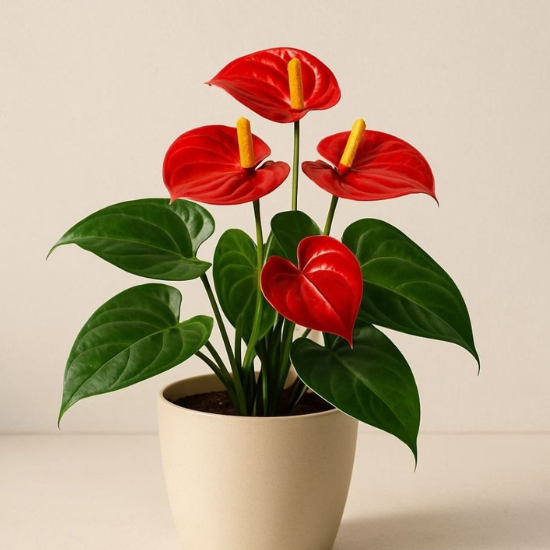
Anthurium is one of the easiest flowering plants to grow at home, as long as you get light and water right. Its glossy red, pink or white blooms can last for weeks. Kerala’s warm and humid weather is also close to what this plant likes. This anthurium care guide explains each step in simple words.
Anthurium (Anthurium andraeanum) is a tropical plant from the rainforests of Central and South America. People also call it the flamingo flower or tailflower. It stays compact, so it works well in pots on a balcony, verandah or bright room.
The colorful “flower” is actually a modified leaf called a spathe. The small spike in the middle is the spadix, which holds the tiny true flowers. If you are building a colorful garden, anthurium is a good addition to the plants listed in our best flowering plants for Kerala guide.
Best Light for Anthurium
Anthurium grows best in bright, indirect light. Place it near an east-facing window or in a well-lit spot with filtered sunlight. Direct afternoon sun can burn the leaves and leave brown patches.
Too little light is also a problem. The plant will grow slowly and produce few flowers. If you are still choosing indoor plants, see our list of the best indoor plants for Kerala homes.
How to Water Anthurium
Overwatering is the most common mistake. Water only when the top 2 to 3 cm of soil feels dry. In hot weather this may be once or twice a week, and less often during heavy rain.
Follow these steps:
- Check the soil with your finger.
- Water slowly until extra water drains from the pot.
- Empty the saucer after 10 minutes.
- Use room-temperature water.
Soggy roots rot quickly. Our Kerala monsoon gardening tips and summer gardening tips for Kerala explain how to adjust watering through the year.
Best Soil and Pot for Anthurium
Anthurium roots need air. Heavy garden soil holds too much water and can choke them. A loose, well-draining mix works much better.
A good mix can include:
- Cocopeat (2 parts)
- Orchid bark or small wood chips (1 part)
- Perlite or coarse sand (1 part)
- A little compost for nutrients
Choose a pot with drainage holes that is only slightly larger than the root ball. Read our guide on how to choose the right pot for your plant and our list of the best pots and planters for home gardening. For more ideas, see container gardening in Kerala.
Temperature and Humidity
Anthurium is comfortable between about 18°C and 30°C, which suits most of Kerala through the year. It struggles below 15°C, so keep it away from cold air conditioner drafts. It also prefers high humidity, usually 60 to 80 percent.
In dry rooms, group plants together or place the pot on a tray of wet pebbles, keeping the pot base above the water. Wipe the leaves with a damp cloth to remove dust. Avoid misting the flowers often, since it can cause spots.
Fertilizer for More Flowers
Feed your anthurium every 4 to 6 weeks during the growing season. Use a balanced liquid fertilizer diluted to half strength. Some growers use a fertilizer with higher phosphorus (the middle number on the label) to support blooms.
Too much fertilizer can burn the roots and cause brown leaf tips. For a natural option, try well-rotted compost or the methods in our organic gardening for beginners guide. You can also make your own with kitchen waste composting at home.
Common Anthurium Problems and Fixes
Most problems come from water, light or humidity. The table below shows quick fixes.
| Problem | Likely Cause | Fix |
| Yellow leaves | Overwatering or poor drainage | Let soil dry, check drainage holes |
| Brown leaf tips | Low humidity or extra fertilizer | Raise humidity, reduce feeding |
| No flowers | Too little light | Move to brighter indirect light |
| Brown spots on leaves | Direct sun or leaf spot disease | Shift to shade, remove affected leaves |
| Sticky or cottony patches | Mealybugs or scale | Wipe with soapy water, repeat weekly |
For more help, see our post on common gardening problems in Kerala.
How to Propagate Anthurium
The easiest method is division. Remove the plant from its pot in spring or early monsoon and gently separate a section that has its own roots. Plant it in fresh mix and keep it in bright, indirect light.
You can also take a stem cutting that has at least one aerial root. Place it in moist cocopeat and keep it warm and humid until new roots form. Division gives faster and more reliable results for
Final Thoughts
Good anthurium care comes down to a few habits. Give it bright indirect light, water only when the soil is dry, use a loose potting mix and keep humidity high. Repot every 1 to 2 years when roots fill the pot.
Start with one healthy plant, watch how it responds, and adjust slowly. For more plant ideas, explore our Kerala garden plants list.