
Quick answer: The most important Kerala monsoon gardening tips are to fix drainage before heavy rain arrives, stop watering on a fixed schedule and check the soil instead, improve airflow around plants to prevent fungal disease, and support tall or climbing plants against wind and rain damage. Most monsoon plant problems come from too much water sitting around the roots, not too little care.
Monsoon changes almost everything about how a Kerala garden needs to be managed, which is why a dedicated set of Kerala monsoon gardening tips matters more than generic seasonal advice. The same rainfall that keeps plants growing can just as easily drown them if drainage, watering, and airflow aren’t handled correctly. Every year, more plants are lost to waterlogging and fungal disease during monsoon than to almost any other single cause.
The good news is that most monsoon problems are preventable with a few adjustments made early, before the heaviest rains set in. This guide covers exactly what to check and change in your routine once monsoon arrives.
Why Monsoon Changes How You Garden in Kerala
Kerala’s monsoon brings sustained, heavy rainfall over weeks at a time, along with humidity that stays high even between showers. For plants, this combination creates two separate risks: the roots can sit in saturated soil for days, and the leaves and stems stay damp long enough for fungal spores to take hold.
A watering and care routine that works fine in dry weather can actively harm plants once monsoon sets in. Continuing to water on your usual schedule when the soil is already saturated is one of the most common and preventable mistakes Kerala gardeners make each year.
For a full overview of general plant care across the whole year, our Gardening Tips for Kerala Homeowners guide covers the basics that monsoon care builds on.
Fix Drainage Before the Rain Gets Heavy
Drainage problems are far easier to fix before monsoon starts than during it. Once heavy rain is falling daily, there’s little you can do beyond damage control.
Before the rains intensify, check for:
- Standing water that collects in any part of the garden after a normal shower
- Containers and pots without adequate drainage holes
- Blocked or clogged drainage outlets on terraces and raised beds
- Soil that stays visibly wet a full day after rainfall
- Low spots in the yard where water naturally pools
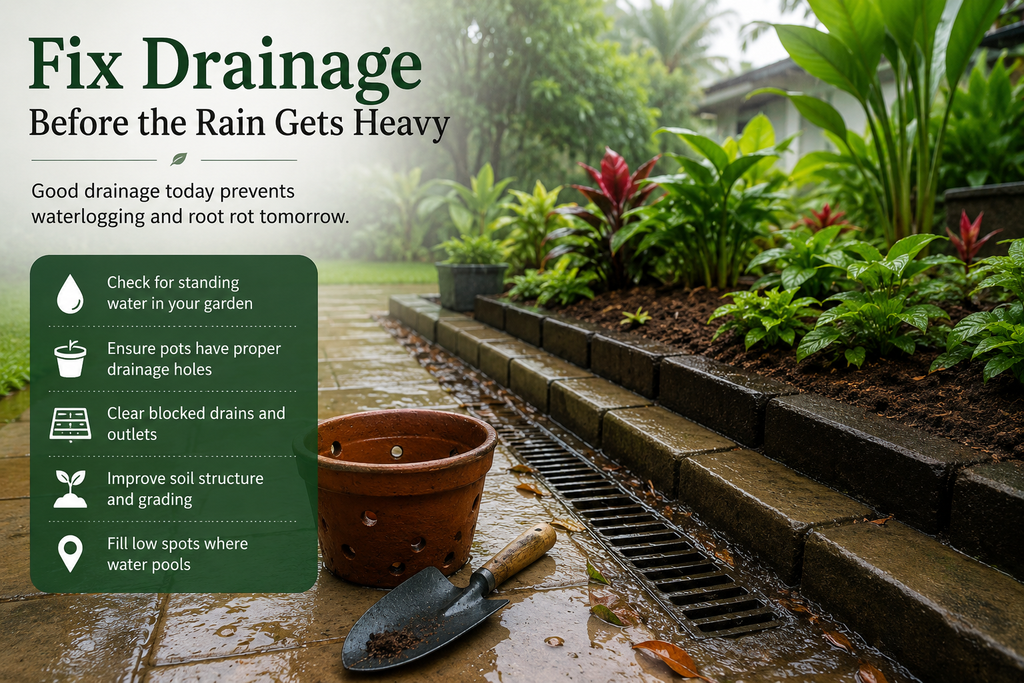
If you spot any of these, address them now. Improve grading in low spots, unblock drainage holes, and move any pots without proper holes into ones that have them. A little preparation here prevents most of the serious problems that show up later in the season.
Adjust Your Watering Routine
The single biggest adjustment monsoon requires is simple: stop watering on a fixed schedule and start checking the soil first.
Insert a finger a couple of inches into the soil before watering anything. If it still feels moist, skip watering that day, recent rainfall is likely doing the job already. This applies just as much to container plants as it does to garden beds, since pots can hold moisture for longer than expected once rain becomes frequent.
Overwatering during monsoon shows up as yellowing leaves, wilting despite wet soil, soft or blackened roots, and a persistent musty smell from the soil. If you notice these signs, ease off watering immediately and check that excess water actually has somewhere to drain.
Protect Plants From Fungal Disease and Rot
High humidity and prolonged leaf wetness create ideal conditions for fungal problems during monsoon. A few habits reduce the risk significantly.
Improve airflow by spacing plants further apart than you might during drier months. Dense, overcrowded foliage stays damp longer and makes early signs of disease harder to spot.
Remove damaged or diseased leaves as soon as you notice them, rather than waiting. Leaving infected foliage in place gives fungal spores more time to spread to healthy growth nearby.
Inspect regularly, ideally after any period of sustained heavy rain. Watch for leaf spots, unusual discoloration, soft or rotting tissue, and mould-like growth on stems or soil.
Water at the base, not the leaves, whenever you do need to water manually. Wet foliage that doesn’t dry out between waterings is far more vulnerable to fungal infection than consistently dry leaves.
Support Tall and Climbing Plants
Wind and heavy rain together can be harder on a garden than either one alone. Tall plants and climbers are particularly vulnerable to toppling or breaking during monsoon storms.
Check stakes, trellises, and other supports before the season’s heaviest rain arrives, and reinforce anything that looks loose or weathered. Climbing vegetables like bitter gourd and snake gourd, along with ornamental climbers like Bougainvillea, all benefit from secure support that can handle sustained wind and the added weight of rain-soaked foliage.
Monsoon Care for Container and Terrace Gardens
Container and terrace gardens face monsoon differently than ground-level beds, mainly because there’s less soil volume to absorb excess water.
Elevate pots slightly off the ground or terrace surface using pot feet or a stand, so excess water can drain freely instead of pooling underneath. Double-check that every container’s drainage holes are clear and unobstructed, since a single blocked hole can undo an otherwise well-planned setup.
For particularly vulnerable plants, moving containers to a covered but still bright spot during the heaviest rain spells can prevent waterlogging without depriving them of light. Our guide to Best Pots and Planters for Home Gardening covers which materials and setups handle monsoon conditions best if you’re choosing new containers before the season starts.
A Quick Monsoon Checklist
Run through this after any period of heavy rainfall:
- Is water collecting anywhere near the base of your plants?
- Are all drainage holes clear and functioning?
- Does the soil still feel wet from a day or more ago?
- Are plants overcrowded or short on airflow?
- Do tall or climbing plants need additional support?
- Are there any damaged, diseased, or rotting leaves to remove?
A few minutes spent on this checklist after each major rain event catches most problems while they’re still easy to fix.
Conclusion
Kerala’s monsoon doesn’t have to be a difficult season for your garden. These Kerala monsoon gardening tips come down to one core idea: excess water sitting where it shouldn’t, whether that’s around plant roots, on damp leaves, or in a blocked container, is behind most of the risk. Fix drainage early, water according to the soil rather than the calendar, and keep airflow and support in good shape, and your plants should come through the season in strong condition.
If a plant is already showing signs of stress and you’re not sure why, our troubleshooting guide to [Common Gardening Problems in Kerala] walks through the most frequent symptoms and their likely causes. For outdoor plants that hold up especially well through Kerala’s rainy season, see our guide to Best Outdoor Plants for Kerala Gardens.