Quick answer: The best indoor plants for Kerala homes are ones that tolerate warmth, humidity, and moderate to low light, since most rooms don’t get direct sun for long stretches. Snake Plant, ZZ Plant, Money Plant, Peace Lily, Areca Palm, and Aglaonema are reliable choices that adapt well to indoor conditions and forgive occasional missed waterings.
Indoor gardening has become a natural fit for Kerala’s growing apartment culture. Balconies are smaller, outdoor space is limited, and more homeowners want greenery that fits inside the house rather than around it. The good news is that Kerala’s warm, humid climate actually favors many popular indoor plants, most of them coming from tropical regions in the first place.
The challenge with indoor plants for Kerala homes isn’t whether you can grow them successfully. It’s choosing the right ones for the light your rooms actually get, and caring for them in a way that matches Kerala’s humidity rather than working against it. This guide covers both.
Why Indoor Plants Work Well in Kerala Homes
Kerala’s climate has a few natural advantages for indoor gardening. Warm temperatures year-round mean indoor plants rarely face the cold-weather dormancy that limits growth elsewhere in India. High ambient humidity suits many popular houseplants, since tropical foliage plants often struggle in the dry, air-conditioned interiors common in cooler climates.
That said, indoor conditions still differ from outdoor ones in one major way: light. Even a bright room typically gets far less direct light than an outdoor garden bed. This is the single biggest factor in choosing indoor plants correctly. A plant labeled “low maintenance” can still fail indoors if it’s placed somewhere with almost no natural light at all.
For general growing conditions and plant care across your whole garden, our Gardening Tips for Kerala Homeowners guide is a useful starting point alongside this one.
Best Indoor Plants for Kerala Homes
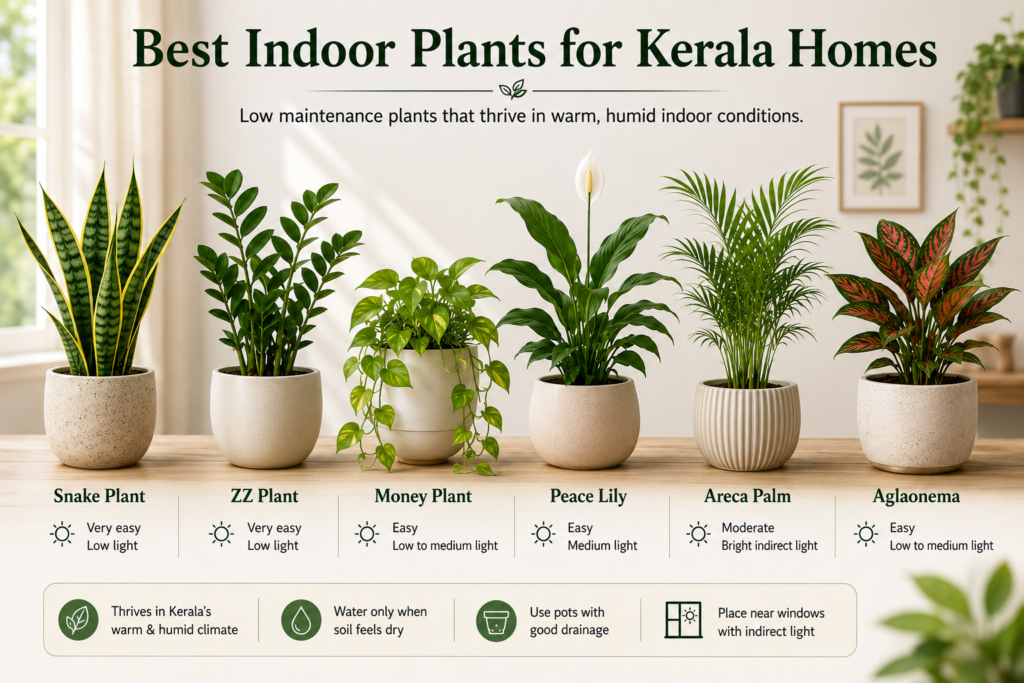
Here are six reliable choices for Kerala interiors, along with what each one needs to thrive.
| Plant | Light Needs | Watering | Difficulty |
| Snake Plant | Low to bright indirect | Every 2-3 weeks | Very easy |
| ZZ Plant | Low to bright indirect | Every 2-3 weeks | Very easy |
| Money Plant | Low to medium indirect | Weekly | Easy |
| Peace Lily | Medium indirect | Weekly, keep soil moist | Easy |
| Areca Palm | Bright indirect | Twice weekly | Moderate |
| Aglaonema | Low to medium indirect | Weekly | Easy |
Snake Plant tolerates almost any indoor condition, low light, irregular watering, even a bit of neglect. Its upright, structural leaves also make it a strong choice for narrow corners and hallways where floor space is tight.
ZZ Plant is similarly forgiving and handles low light better than most houseplants. We’ve covered this one in detail in our ZZ Plant Care guide, including watering schedules and common problems to avoid.
Money Plant is a Kerala household favorite, partly for its ease of care and partly for the belief that it brings good fortune. It grows well trailing from a shelf or climbing a moss pole, and it roots easily in water if you want to propagate more from a single plant.
Peace Lily stands out for its ability to flower indoors, something most houseplants on this list don’t do. It also signals its watering needs clearly by drooping slightly when thirsty, which makes it a good option for beginners still learning to read a plant’s cues.
Areca Palm brings a fuller, more tropical look and works well as a statement plant in a living room corner. It needs brighter light than the others on this list, so it’s better suited to a spot near a window than a dim interior room.
Aglaonema, commonly known as Chinese Evergreen, offers colorful patterned foliage and tolerates lower light better than most colorful houseplants, making it a good way to add visual interest to a shaded spot.
Choosing Indoor Plants by Room Light Level
Matching the plant to the room matters more than any other single decision.
Low light spaces (interior rooms, spots away from windows) suit Snake Plant, ZZ Plant, and Aglaonema best. These plants are genetically adapted to grow in the shaded understory of forests, so dim indoor corners don’t stress them the way it would a sun-loving plant.
Medium indirect light (a few feet from a window, or a room with filtered light through curtains) works well for Money Plant, Peace Lily, and most other common houseplants.
Bright indirect light (near a window but out of direct sun) is where Areca Palm and most flowering indoor plants perform best. Direct, unfiltered sun through glass can actually scorch many indoor plants, so bright doesn’t mean placing them right against the glass.
If you’re unsure what light level a room gets, observe it at different times of day before choosing a plant. A room that looks bright at noon might be quite dim by late afternoon.
Basic Indoor Plant Care in Kerala’s Climate
Kerala’s humidity changes the usual indoor plant care advice slightly. Because the air already holds more moisture than in drier climates, indoor plants generally need less frequent watering than care labels suggest, especially during monsoon months.
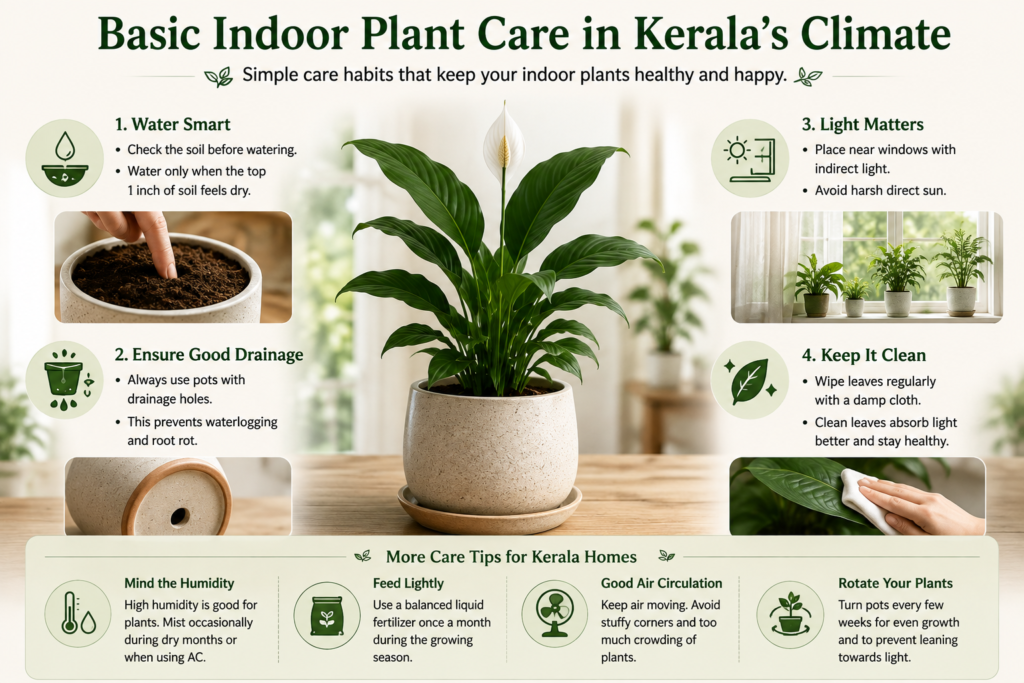
Check the soil before watering rather than following a fixed schedule. Insert a finger about an inch into the soil, and only water if it feels dry at that depth. Overwatering is the most common way indoor plants die in Kerala homes, not underwatering.
Pot choice also plays a role indoors. A container without proper drainage can trap excess moisture around the roots even in a dry season. Our guide to Best Pots and Planters for Home Gardening covers which materials and sizes work best for indoor plants specifically.
Common Indoor Plant Problems and Quick Fixes
A few issues come up repeatedly with indoor plants in Kerala homes.
- Yellowing leaves usually point to overwatering rather than a lack of nutrients. Check the soil moisture and drainage before assuming the plant needs fertilizer.
- Mealybugs, small white, cotton-like insects, are common on indoor plants due to warm, still air. Wipe them off with a cotton swab dipped in diluted neem oil.
- Leggy, stretched growth happens when a plant isn’t getting enough light. Move it closer to a window or rotate it regularly so it doesn’t grow lopsided reaching for light.
- Root rot develops when soil stays wet for too long. If a plant is wilting despite moist soil, check the roots, remove any that are soft or blackened, and repot in fresh, well-draining soil.
Catching these problems early almost always leads to a full recovery. Indoor plants tend to show stress gradually, which gives you time to adjust before real damage sets in.
Conclusion
Kerala’s warm, humid climate is genuinely well-suited to indoor gardening, so long as you match each plant to the light your room actually gets and adjust watering to the season. Snake Plant, ZZ Plant, Money Plant, Peace Lily, Areca Palm, and Aglaonema all make dependable starting points for a first-time indoor gardener.
Once you’ve chosen your plants, pairing them with the right containers makes a real difference in how well they grow. Browse ROOTIQUE’s full range of pots and planters suited to indoor spaces, or explore our upcoming guides to [Best Flowering Plants for Kerala] and [Best Outdoor Plants for Kerala Gardens] to round out the rest of your home garden.