Quick answer: Ixora care is simple. Give it full sun to partial shade. Water when the top inch of soil feels dry. Use well-draining soil enriched with compost. Prune lightly to shape it as a standalone shrub, or trim regularly if growing it as a hedge. Get these basics right, and Ixora rewards you with dense flower clusters for much of the year.
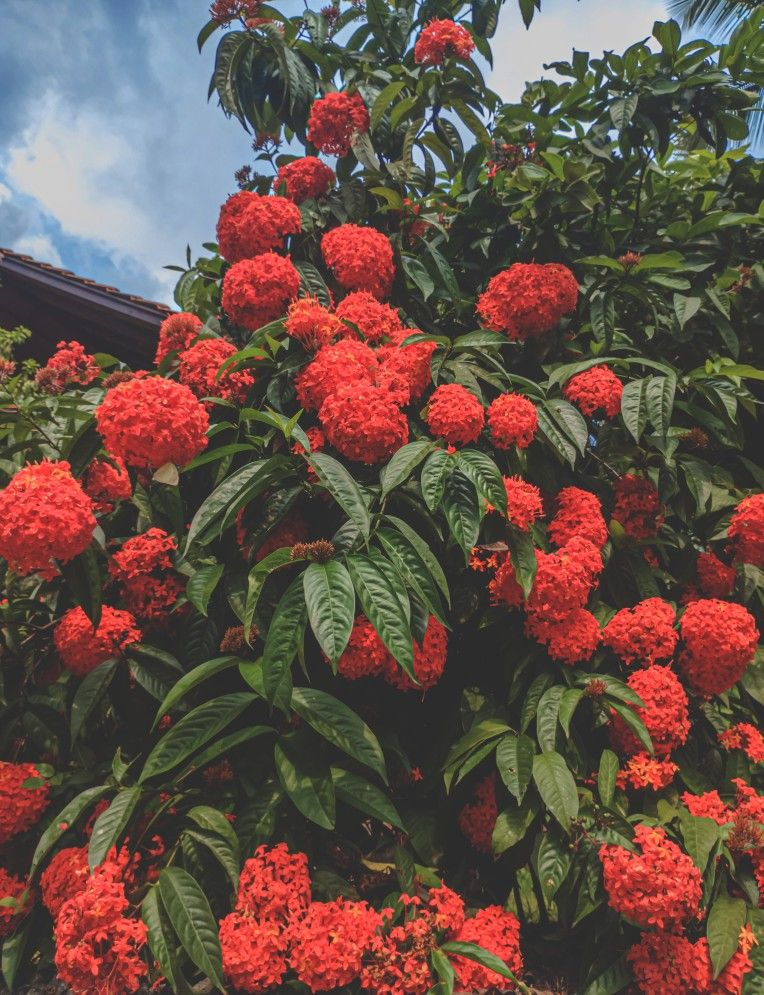
Ixora is one of the most flexible flowering plants in a Kerala garden. It suits a standalone flowering shrub just as well as a neatly trimmed hedge. Its dense clusters of small, star-shaped flowers bloom reliably in Kerala’s warm climate. The plant also tolerates regular pruning well, which is part of why it works so well in both roles.
This guide covers what Ixora needs to thrive. It also covers pruning approaches for each use and the problems it occasionally runs into.
Sunlight Requirements
Ixora flowers best in full sun, though it tolerates partial shade reasonably well. Aim for at least 4 to 6 hours of sunlight daily for the strongest blooming. In deeper shade, the plant survives but produces noticeably fewer flowers.
If you’re growing Ixora as a hedge along a shaded boundary, expect somewhat sparser flowering than a plant in full sun. The trade-off is usually worth it for the structural benefit a hedge provides.
Watering Ixora
Ixora likes consistent moisture but doesn’t tolerate waterlogged soil. Water when the top inch of soil feels dry to the touch. During Kerala’s summer, this might mean watering every day or two for potted plants. During monsoon, cut back significantly and rely on rainfall.
Good drainage matters as much as watering frequency, particularly for hedge plantings where several Ixora shrubs sit close together. Our guide to Best Pots and Planters for Home Gardening covers good container choices if you’re growing Ixora in pots.
Soil and Feeding
Ixora prefers well-draining, slightly acidic soil enriched with organic matter. Mix compost into the planting area or potting mix to give it a strong start.
Feed every 4 to 6 weeks during the main growing season with a fertilizer that supports flowering. Choose one with more phosphorus and potassium relative to nitrogen. Reduce feeding during the heaviest monsoon months, when growth naturally slows.
Pruning: Standalone Shrub vs Hedge
How you prune Ixora depends entirely on the role it’s playing in your garden.
As a standalone flowering shrub, prune lightly after each flowering cycle. Cut back leggy or overgrown stems by about a third, always just above a leaf node. This encourages branching and more flowering points for the next bloom cycle. Avoid heavy pruning during active flowering, since it removes buds before they open.
As a hedge, trim more frequently and evenly to maintain a consistent shape, typically two to three times a year. Expect somewhat less flowering than an unshaped shrub, since regular trimming removes some buds along with excess growth. This trade-off is standard for most flowering hedge plants. Our guide to Hedge Plants for Kerala Gardens covers spacing and shaping in more detail.
Common Problems
Ixora is generally easy to grow, but a few issues come up often enough to know about.
- Yellowing leaves can point to overwatering, poor drainage, or occasionally an iron deficiency in alkaline soil. Check drainage first before assuming a nutrient issue.
- Reduced flowering most often traces back to insufficient sunlight or a lack of regular light pruning. Check both before reaching for extra fertilizer.
- Aphids commonly target new growth and flower buds. A neem oil spray applied in the early morning or evening usually clears them up within a week or two.
- Sparse, leggy growth typically means the plant hasn’t been pruned in a while. A round of light pruning after the next bloom cycle usually restores fuller growth.
Conclusion
Ixora earns its place in Kerala gardens by doing double duty well. It’s a reliable flowering shrub on its own, and a dependable hedge plant when trimmed regularly. Give it good sun, consistent watering, and pruning suited to its role. It will reward you with color for much of the year either way.
For more flowering plants to grow alongside Ixora, see our guide to Best Flowering Plants for Kerala. If you’re considering it for a boundary hedge, explore Hedge Plants for Kerala Gardens too.