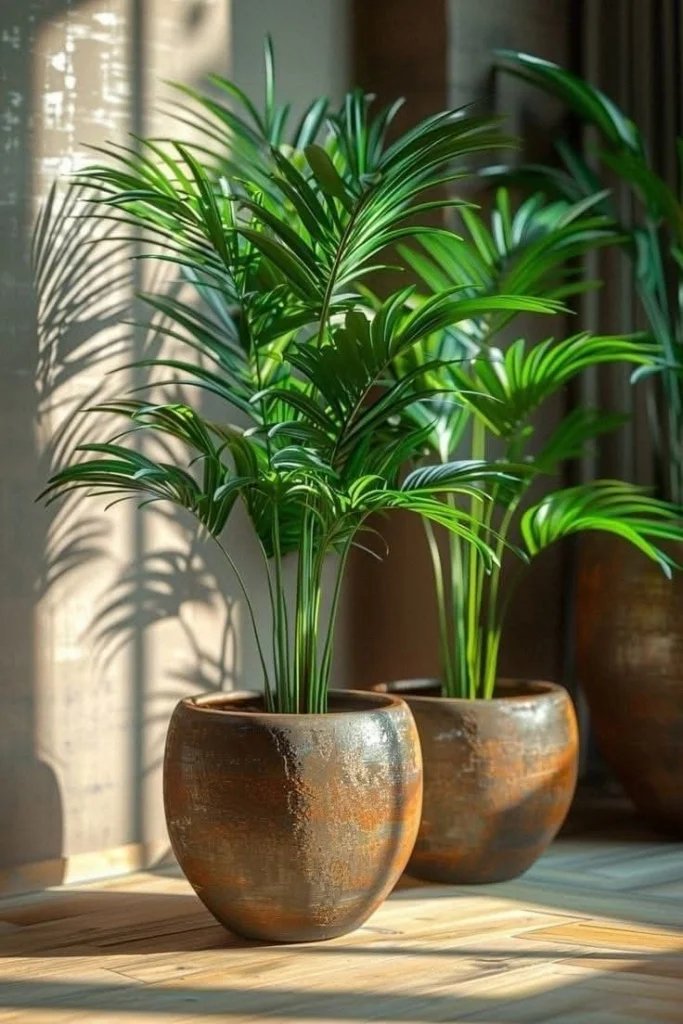
Quick answer: Areca Palm care depends partly on whether you’re growing it indoors or outdoors. Indoors, give it bright indirect light and water when the top inch of soil dries out. Outdoors, plant it in full sun to partial shade with regular watering. Both settings need well-draining soil. Areca Palm rewards consistent care with a full, tropical look. It works equally well as a living room feature or a garden privacy screen.
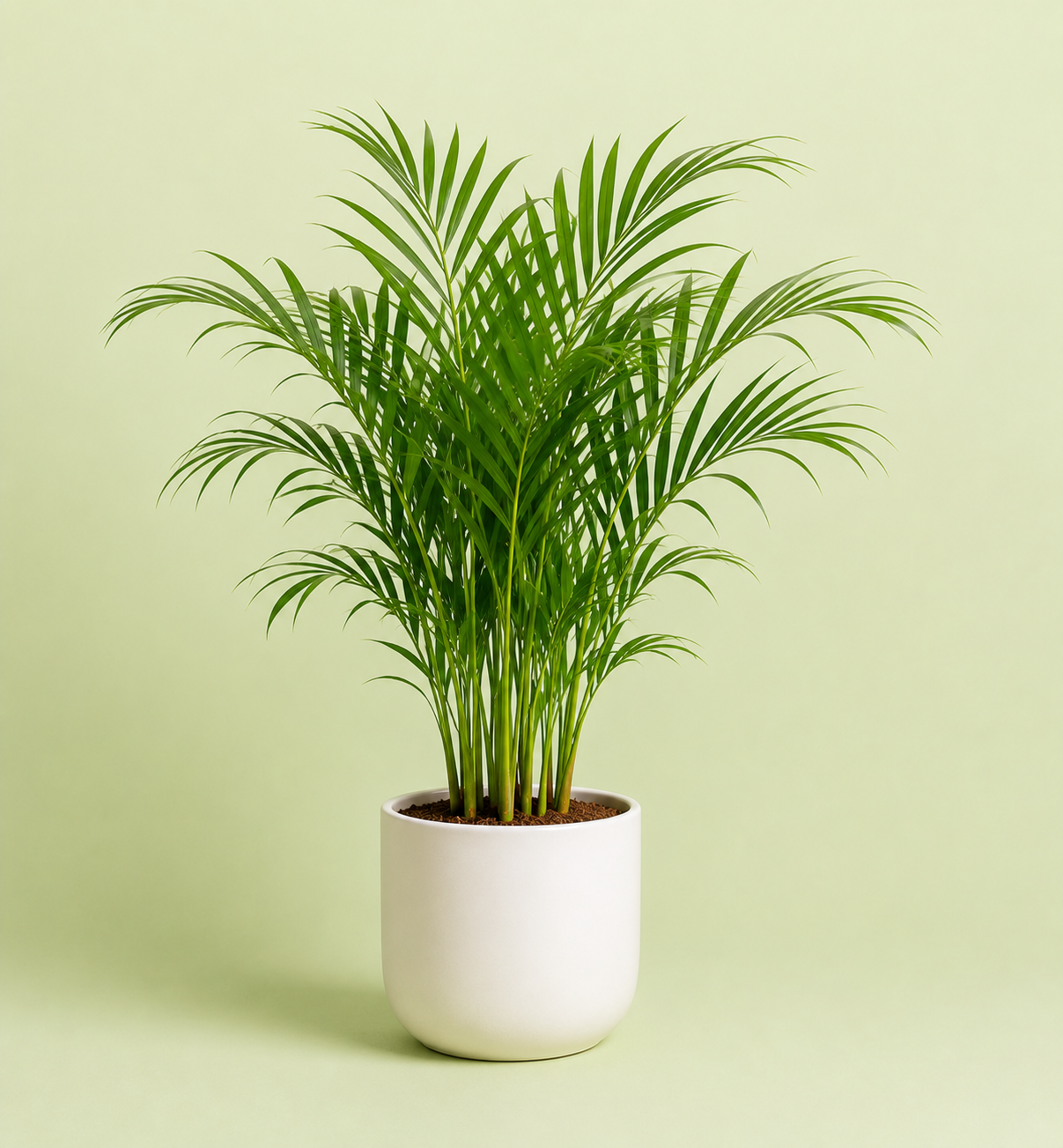
Areca Palm is one of the more versatile plants in a Kerala garden. It’s equally at home as an indoor feature plant or an outdoor privacy screen. Its feathery, arching fronds bring a lush, tropical look wherever it’s placed. It adapts reasonably well to both container and ground growing.
This guide covers care for Areca Palm in both indoor and outdoor settings. It also covers common problems to watch for either way.
Light Requirements
Areca Palm’s light needs to shift depending on where you’re growing it.
Indoors, it needs bright, indirect light. A spot near a window without direct sun exposure works well. In too little light, growth slows and the fronds can start looking sparse and pale.
Outdoors, Areca Palm tolerates full sun to partial shade. It grows fastest with a good amount of direct sunlight. Some afternoon shade helps protect younger plants from the harshest midday heat.
Watering Areca Palm
Areca Palm likes consistent moisture but doesn’t tolerate sitting in waterlogged soil.
Indoors, water when the top inch of soil feels dry to the touch. This is typically once or twice a week, depending on light and room conditions. Brown leaf tips often signal either underwatering or low humidity, both common indoor issues.
Outdoors, water regularly while the plant is young and establishing its root system. Once mature, Areca Palm tolerates Kerala’s rainfall well, though good drainage remains essential year-round. During monsoon, make sure water doesn’t pool around the base. Our guide to Best Pots and Planters for Home Gardening covers container drainage for indoor Areca Palm.
Soil and Feeding
Areca Palm needs well-draining soil in either setting. For containers, a potting mix formulated for palms or a general mix amended with sand or perlite works well. For outdoor planting, mix compost into the soil to improve both drainage and fertility.
Feed indoor plants every 2 to 3 months with a balanced liquid fertilizer during the growing season. Outdoor plants benefit from compost worked into the soil once or twice a year. An occasional balanced feed during active growth periods also helps.
Growing Areca Palm Indoors vs Outdoors
Beyond light and watering, a few other differences matter depending on where you’re growing it.
Indoor Areca Palm stays more compact and benefits from occasional misting or a nearby humidity tray. Indoor air, especially with air conditioning, tends to be drier than what the plant prefers. Rotate the pot occasionally so it grows evenly rather than leaning toward the light source.
Outdoor Areca Palm grows taller and fuller over time, making it a popular choice for boundary planting and privacy screens. Space multiple plants roughly a meter apart if you’re planting a row. This gives each one room to develop its full, arching shape. See our guide to Best Outdoor Plants for Kerala Gardens for more on using Areca Palm in a boundary planting.
Common Problems
A handful of issues show up in Areca Palm regardless of setting.
- Brown leaf tips usually point to low humidity, inconsistent watering, or a buildup of minerals from tap water. This is more common indoors than outdoors.
- Yellowing fronds can signal overwatering and poor drainage. Check the soil and root health before assuming a nutrient problem.
- Spider mites, tiny pests that thrive in dry indoor air, sometimes appear on indoor plants. Regular misting and occasional wiping of the fronds helps prevent infestations.
- Slow growth outdoors often means insufficient sunlight or compacted, poorly draining soil. Check both before adding fertilizer.
Conclusion
Areca Palm adapts well to Kerala homes, whether you’re growing it as an indoor feature or an outdoor privacy screen. Just match its light and watering needs to the setting. Keep soil well-drained, and watch for the early signs of stress specific to each environment. It will reward you with lush, tropical greenery for years.
For more plants that work well indoors, see our guide to Best Indoor Plants for Kerala Homes. For more options suited to boundary planting and garden screens, explore Best Outdoor Plants for Kerala Gardens.