Quick answer: The best hedge plants in Kerala are Ixora, Croton, Ficus, and Ashoka. All four tolerate Kerala’s heat and monsoon rain well, and they respond well to regular trimming. Ficus and Ashoka work best for tall privacy screens. Ixora and Croton suit shorter, more decorative borders.
Hedges do more than mark a boundary. A well-chosen hedge adds privacy and structure. It also brings year-round greenery to a Kerala garden, often with far less upkeep than a fence or wall. The right choice depends on three things: how tall you need it, how much sun the spot gets, and how much trimming you’re willing to do.
This guide covers the most reliable hedge plants in Kerala. It also covers how to plant and space them, along with basic care to keep a hedge looking sharp.
Why Hedge Plants Work Well in Kerala Gardens
Kerala’s warm, humid climate suits fast-growing hedge species particularly well. Most popular hedge plants here establish quickly and recover fast after pruning. A new hedge can fill in within a year or two rather than several.
Monsoon rain also benefits hedges more than it stresses them, provided the planting area drains reasonably well. Dense hedges do need decent airflow, though. Overly tight spacing can trap humidity and encourage fungal issues. Getting the spacing right from the start matters more with hedges than with standalone shrubs.
For a broader look at Kerala’s outdoor plant options, our Best Outdoor Plants for Kerala Gardens guide covers plants beyond hedging too.
Best Hedge Plants in Kerala
| Plant | Mature Height | Sunlight | Growth Rate |
| Ficus | 2-4 meters | Full sun | Fast |
| Ashoka | 3-6 meters | Full sun | Moderate |
| Ixora | 1-2 meters | Full sun to partial shade | Moderate |
| Croton | 1-2 meters | Partial shade to full sun | Moderate |
Ficus grows quickly into a dense, tall screen and tolerates heavy pruning well. It’s a strong choice when you want a solid privacy hedge in a relatively short time.
Ashoka is a classic choice for Kerala boundaries and driveways. It grows upright and narrow rather than wide, which suits properties with limited width to spare.
Ixora stays more compact and flowers regularly, giving you color along with structure. It suits shorter borders and decorative front-yard hedges better than tall privacy screens.
Croton brings vivid, colorful foliage and needs less frequent trimming than the others to hold its shape. It works well as an accent hedge alongside plainer green varieties.
Choosing Hedges for Different Purposes
Match the hedge to what you actually need it to do.
Privacy screens call for Ficus or Ashoka, both grow tall enough to block sightlines from neighboring properties or the street. Plant these where height matters more than flowering or color.
Boundary marking works well with any of the four. Ashoka’s narrow growth habit makes it easier to maintain along a straight property line without encroaching on walkways.
Ornamental borders suit Ixora and Croton best. Both stay shorter and add visual interest through flowers or foliage color. They suit framing a garden bed better than blocking a view.
If you’re planning a hedge as part of a larger landscape design, our Landscaping in Kerala guide covers how hedges fit into a broader layout.
Planting and Spacing Hedges
Spacing affects how quickly a hedge fills in and how healthy it stays long term. Plant too close together, and airflow suffers. Plant too far apart, and gaps take years to close.
As a general guide, space Ficus and Ashoka about 60 to 90 centimeters apart for a dense screen. Space Ixora and Croton slightly closer, around 45 to 60 centimeters, since they naturally stay more compact.
Dig planting holes twice the width of the root ball, and mix compost into the soil before planting. Water thoroughly after planting, and keep the soil consistently moist for the first few weeks while roots establish.
Basic Hedge Maintenance
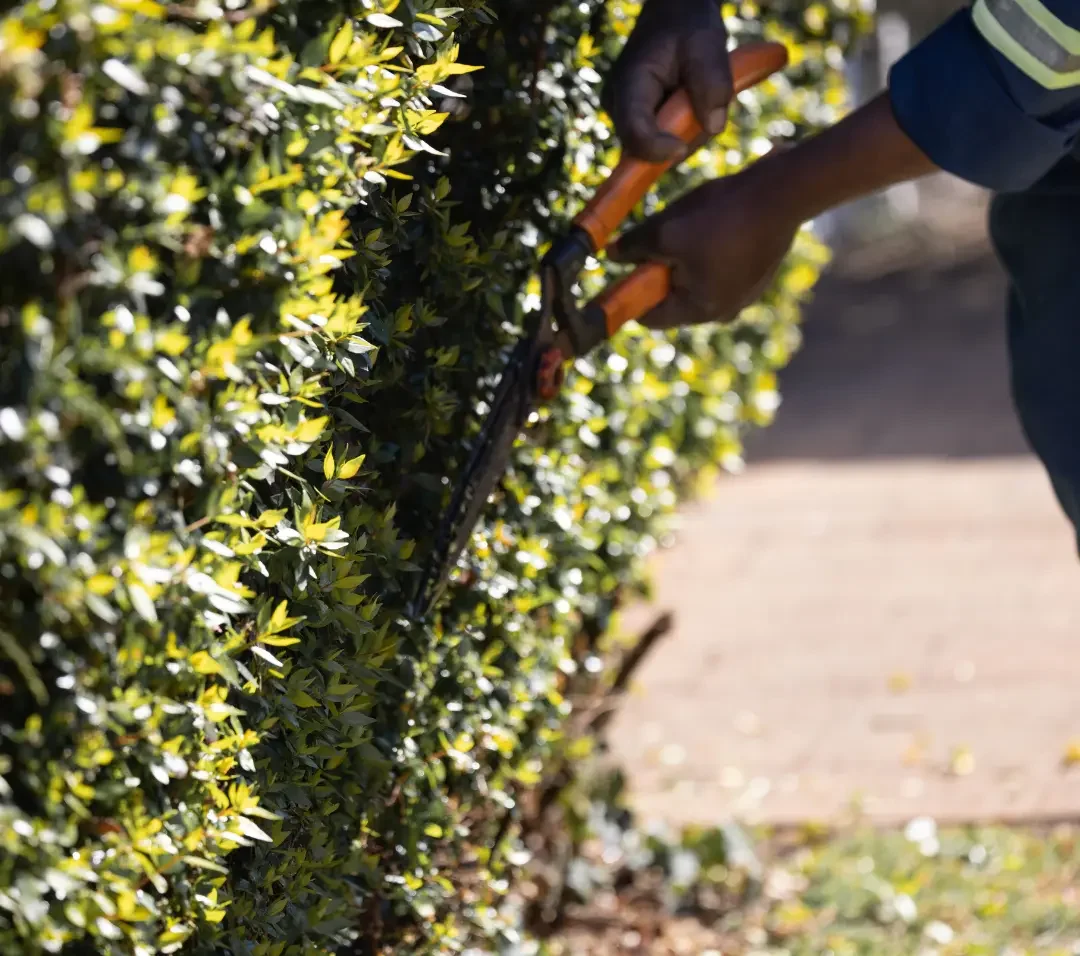
Regular trimming is what keeps a hedge looking like a hedge rather than a loose row of shrubs.
Trim young hedges lightly and often in the first year to encourage dense branching from the base. Once established, most Kerala hedge plants need shaping two to three times a year. Fast growers like Ficus need it more often, slower ones like Croton less.
Always trim slightly narrower at the top than at the base. This lets sunlight reach the lower branches too. The hedge stays full and green from top to bottom instead of bare underneath.
Common Problems
A few issues come up regularly with hedge plants in Kerala.
- Bare patches at the base usually result from a hedge trimmed wider at the top than the bottom. This shades out the lower branches over time.
- Fungal spots on leaves often follow poor airflow from overly tight spacing, especially during monsoon. Thinning dense growth can help.
- Slow or patchy growth can point to poor soil, insufficient sunlight, or uneven watering across the hedge line. Check all three before assuming it’s a pest problem.
- Pest damage, particularly from aphids and scale insects, shows up more often on stressed or overcrowded hedges. A neem oil spray usually handles both without harsh chemicals.
Conclusion
Hedge plants in Kerala offer an easy way to add privacy, structure, and color to a garden. Upkeep stays manageable if you keep up with it. Choose Ficus or Ashoka for height, Ixora or Croton for a shorter decorative border. Regular trimming holds the shape you want.
For more plants suited to Kerala’s outdoor conditions, see our guide to Best Outdoor Plants for Kerala Gardens. If color matters as much as structure, explore Best Flowering Plants for Kerala too.