Quick answer: Good landscaping in Kerala balances traditional design wisdom with practical planning: layer plants by height the way a traditional homestead does, plan drainage and grading before anything else because of the monsoon, and combine hardscaping (paths, walls, decking) with softscaping (plants, lawns) so the space stays both beautiful and functional through every season.
Landscaping in Kerala is a different discipline from general plant care. Kerala’s rich botanical heritage and favorable climate make it one of the most rewarding places in India to design a home landscape, but good landscaping is about how a space is laid out, how water moves through it, how different zones connect, and how the design holds up through heavy monsoon rain and long growing seasons.
Whether you’re working with a spacious traditional homestead, a compact urban plot, or an apartment terrace, this guide focuses specifically on layout, design principles, and planning decisions, not day-to-day plant care. If you’re looking for general growing tips, sunlight and watering guidance, or plant maintenance advice, our Gardening Tips for Kerala Homeowners guide covers that in depth.
The Traditional Kerala Homestead: A Timeless Design Model
Before looking at modern landscaping trends, it’s worth understanding the design Kerala has relied on for generations: the Purayidom, or traditional homestead.
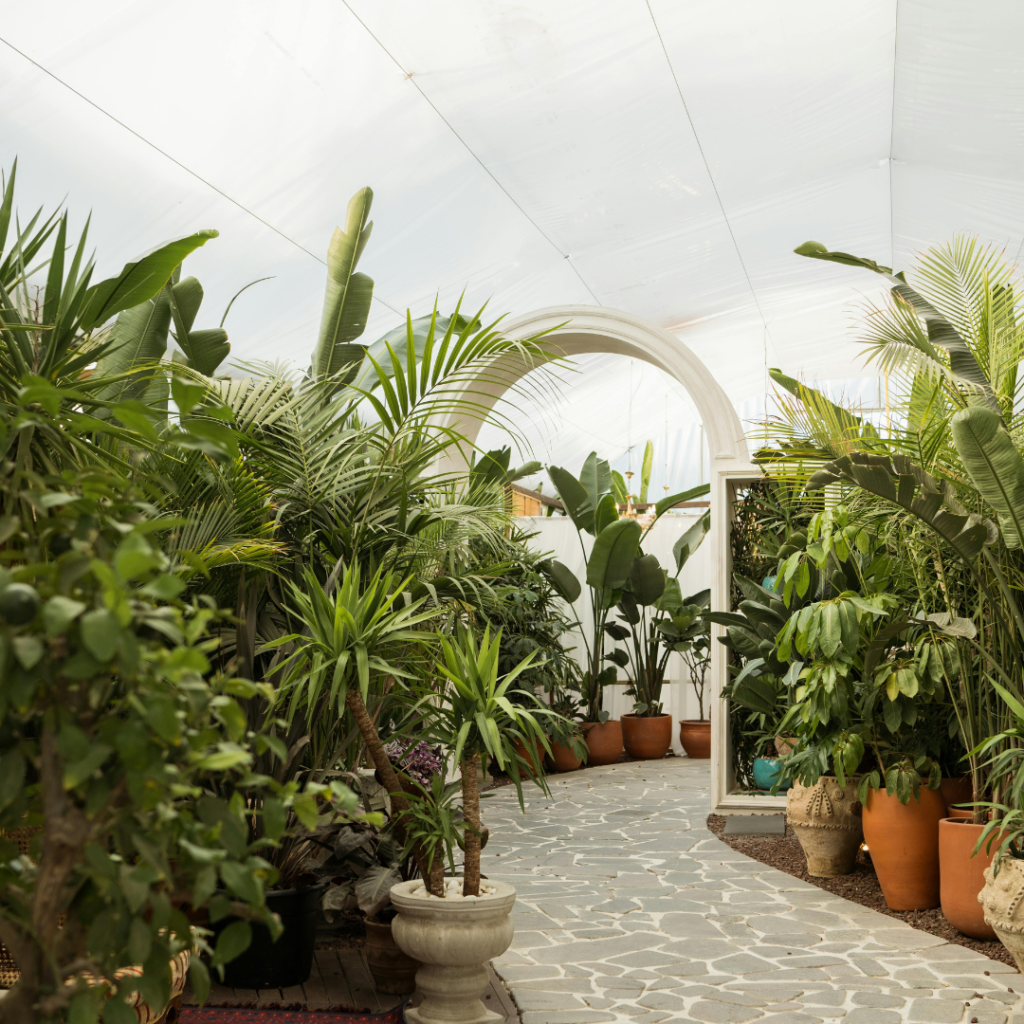
A typical Purayidom layers plants by height and function in one connected space:
Tall coconut palms and fruit trees at the top layer
Mid-height banana, papaya, and spice plants
Flowering shrubs and hedges at eye level
Vegetable patches and ground cover at the base
This layering isn’t decorative by accident. It creates shade where needed, maximizes limited land, and forms a mini ecosystem where each layer supports the others, taller trees shelter shade-loving plants below, while ground-level crops make use of space the canopy doesn’t reach. Modern Kerala landscapes still borrow heavily from this model, even in compact urban plots.
Designing a Functional Landscape for Kerala Homes
Good landscape design in Kerala starts with the climate, not the plant list.
Plan for Drainage First
Heavy monsoon rainfall means grading and drainage decisions come before any planting. A landscape that looks good in January can flood in July if water flow wasn’t planned into the design. Key elements to get right early include:
Sloped grading that directs water away from the house and seating areas
Gravel or permeable paving in high-traffic zones to reduce runoff
Defined drainage channels for low-lying sections of the yard
Balance Hardscaping and Softscaping
A landscape design typically combines two categories of elements, and the ratio between them shapes how the space feels and how much upkeep it needs.
Softscaping includes plants, trees, shrubs, lawns, and ground covers, the living, growing parts of the design.
Hardscaping includes paving, retaining walls, decking, lighting, and water features, the structural, non-living elements.
A design leaning heavily on hardscaping tends to need less day-to-day maintenance but can feel stark without enough greenery worked in. Leaning too far toward softscaping can mean a beautiful but high-maintenance yard. Most well-designed Kerala landscapes find a middle point: hardscaped pathways and seating areas framed by dense, layered planting.
Create Outdoor Living Spaces
Increasingly, Kerala homeowners are designing gardens as extensions of the home rather than just decorative borders. Common additions include:
Covered seating areas and pergolas for shade
Garden pathways connecting different zones
Small water features for ambience
Defined lawn areas for open space
Quiet corners for relaxation or meditation
These features add real usability to a landscape, not just visual appeal.
Landscaping Ideas for Small Homes and Apartments
Limited space calls for different design thinking, not less design.
Vertical Gardens
Vertical gardens turn boundary walls, balcony walls, and entrance areas into growing space without using any floor area. They work particularly well with trailing and foliage plants like ferns and pothos, and they’re one of the most effective ways to add greenery to a small urban plot.
Courtyard Gardens
Inspired by traditional Kerala home architecture, a small internal or semi-enclosed courtyard can bring a garden into the center of a compact home. Pebble pathways, a small water bowl, and accent lighting go a long way in a space that might only be a few square meters.
Terrace Gardens: Structural Planning First
Terrace gardening has become common in Kerala’s cities, but the design work needs to happen before a single pot goes down. Before setting up a terrace garden, confirm:
The terrace’s structural capacity for the weight of soil, containers, and water
Waterproofing is in place and functioning
Drainage outlets are clear and won’t back up during heavy rain
Once the structural basics are sorted, layout decisions, container placement, walking paths, and seating, follow the same softscape and hardscape balance as a ground-level garden. For guidance on choosing the right containers once your terrace is ready, see our upcoming guide to [Best Pots & Planters for Home Gardening].
Native Plants for Kerala Landscaping
Native and well-adapted species are a smart design choice, not just an ecological one. Because they’re suited to Kerala’s climate, they typically need less watering and pest management once established, which means a design built around them stays lower-maintenance over time. Native flowering shrubs and hedges like Thechi (Ixora) and Mulla (Jasmine) also work naturally into the layered structure of a traditional-style landscape. The Kerala Agricultural University publishes region-specific guidance on native and climate-adapted species that’s worth referencing if you want to go deeper on plant selection for your area.
For a full breakdown of which native and climate-adapted plants suit different parts of a Kerala garden, see our guides to [Best Outdoor Plants for Kerala Gardens] and [Best Flowering Plants for Kerala].
Front Yard Landscaping Ideas
The front yard sets the first impression of a home, and Kerala landscapes tend to fall into two broad design directions.
Traditional Kerala style favors tropical plant borders, natural stone pathways, classic gateways, and native flowering shrubs, echoing the look of a Purayidom on a smaller, front-facing scale.
Contemporary style leans toward minimalist lawns, structured architectural plants, accent lighting, and clean paving lines.
Many of the best front yards in Kerala blend the two: contemporary structure with traditional planting, giving a design that feels current without losing the character of the region.
Designing for Low Maintenance
Not every homeowner wants a design that demands constant attention. If low maintenance is a priority, build it into the layout itself rather than trying to manage it after the fact:
Favor hardy structural plants like Crotons, Aloe Vera, and Aglaonema, which hold their shape and color with minimal care
Use mulched beds instead of large lawn areas, since mulch reduces both watering frequency and weeding
Install drip irrigation at the design stage so watering doesn’t depend on daily manual effort
A landscape designed with low maintenance in mind from the start is far easier to sustain than one that’s simplified after the fact.
Understanding Landscaping Costs in Kerala
Landscaping costs vary widely based on several factors:
Site size and existing terrain
Plant selection, mature trees and specimen plants cost more than young saplings and ground cover
Hardscaping elements like paving, retaining walls, and water features
Irrigation system complexity
Lighting design
Ongoing maintenance requirements
Professional landscaping typically costs more upfront than a DIY approach, but it usually pays off in better drainage planning, more durable hardscaping, and plant choices suited to the specific site. When budgeting, homeowners should weigh installation cost against long-term maintenance savings, a well-planned design with the right plants and drainage can significantly reduce yearly upkeep costs.
Bringing It Together: Landscaping in Kerala Done Right
The strongest examples of landscaping in Kerala borrow from tradition while solving very modern problems: limited space, monsoon drainage, and low-maintenance living. Start with the layout and the water flow, choose hardscaping and softscaping that balance beauty with practicality, and layer in native, climate-adapted plants once the structure is right.
For plant selection, seasonal care, and day-to-day maintenance once your landscape is planted, our Gardening Tips for Kerala Homeowners guide picks up where this one leaves off.