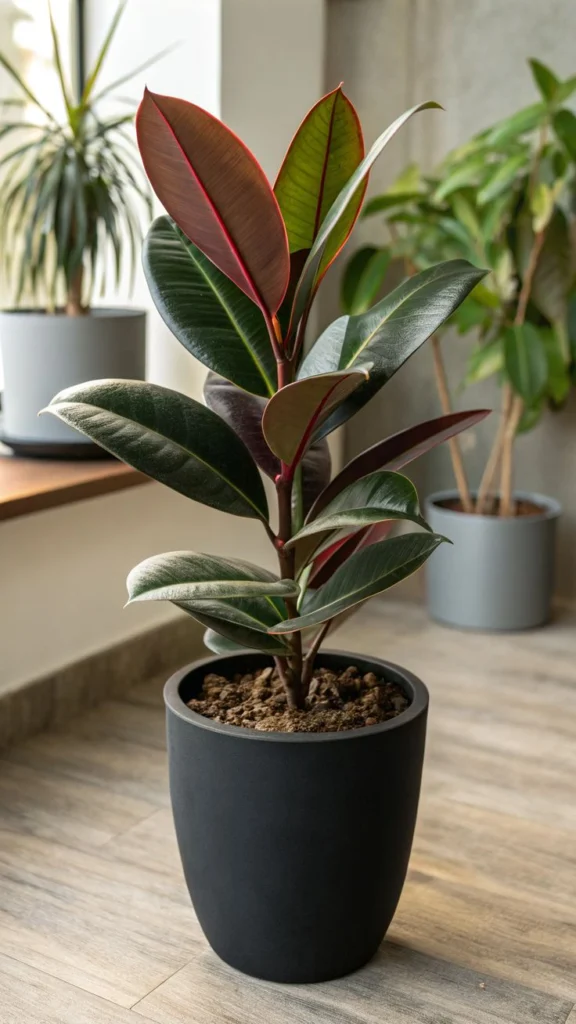
Quick answer: Ficus care is straightforward. Give it full sun. Water when the top inch of soil feels dry. Use well-draining soil. Prune regularly to maintain shape, especially if growing it as a hedge. Ficus tolerates Kerala’s climate well and grows quickly. This makes it one of the most reliable choices for a fast, dense privacy screen.
Ficus is one of Kerala’s most popular hedge plants. It’s valued for how quickly it grows into a dense, solid screen and how well it tolerates regular, even heavy, pruning. Beyond hedging, some Ficus varieties also work well as standalone trees or large potted feature plants. Its most common role in Kerala gardens, though, is as a fast, reliable privacy hedge.
This guide covers what Ficus needs to thrive. It also covers pruning for hedge use and the problems it occasionally runs into.
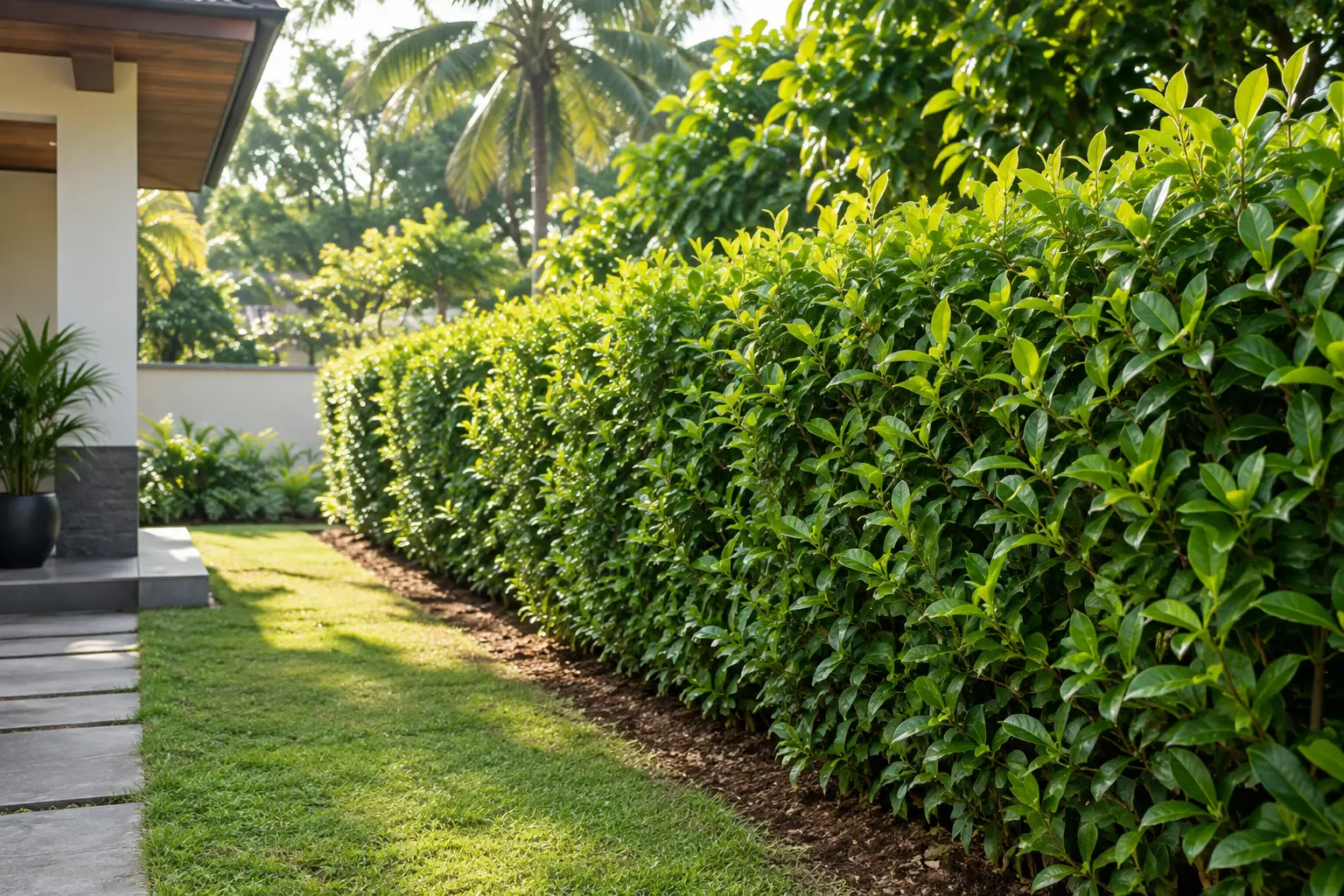
Sunlight Requirements
Ficus grows best in full sun. Aim for at least 6 hours of direct sunlight daily for the fastest, densest growth. In partial shade, it still grows, but more slowly and with less dense foliage. This matters if you’re relying on it for privacy screening.
Choose an open, sunny planting line if you’re establishing a Ficus hedge. Consistent light across the entire row helps it fill in evenly rather than growing patchy in shadier sections.
Watering Ficus
Ficus prefers consistent moisture, particularly while young and establishing, but tolerates some dryness once mature. Water when the top inch of soil feels dry to the touch. Water more frequently for young plants and container specimens than for an established hedge.
During Kerala’s monsoon, natural rainfall usually covers most of a Ficus hedge’s watering needs, provided drainage is adequate. During summer, water more regularly, especially for younger plants still developing their root systems.
Soil and Feeding
Ficus isn’t particular about soil quality and tolerates a range of conditions. It grows fastest in well-draining soil enriched with organic matter, though. Poor drainage is more of a concern than poor fertility for this plant.
Feed young, establishing plants every 6 to 8 weeks during the growing season to support faster growth. Established hedges need less frequent feeding. An occasional compost top-dressing once or twice a year is usually enough to maintain healthy growth.
Planting a Ficus Hedge
Space young Ficus plants about 60 to 90 centimeters apart for a dense privacy screen. Closer spacing fills in faster but costs more upfront in plants. Dig planting holes twice the width of the root ball and mix compost into the soil before planting.
Water thoroughly after planting and keep the soil consistently moist for the first few weeks while roots establish. For more on spacing and planning a hedge line, see our guide to Hedge Plants for Kerala Gardens.
Pruning Ficus
Ficus tolerates heavy, frequent pruning better than most hedge plants. This is part of why it’s such a popular hedging choice. Regular trimming keeps it dense and prevents it from growing too tall or sparse at the base.
Trim young hedges lightly and often in the first year to encourage dense branching low down. Once established, shape two to three times a year, more often if you want a very crisp, formal look. Always trim slightly narrower at the top than the base. This lets light reach the lower branches and keeps the hedge full from top to bottom.
Common Problems
Ficus is generally low-maintenance, but a few issues come up occasionally.
- Bare patches at the base usually result from a hedge trimmed wider at the top than the bottom. This shades out lower growth over time. Adjust your trimming shape to fix this going forward.
- Yellowing leaves can point to overwatering, poor drainage, or a sudden change in conditions like a recent transplant. Established hedges rarely show this unless waterlogged.
- Leaf drop sometimes follows a significant change in light or watering. Ficus is known for reacting to change, and it usually recovers once conditions stabilize.
- Scale insects and mealybugs occasionally appear on stressed or overcrowded plants. A neem oil spray in the early morning or evening usually clears them up within a week or two.
Conclusion
Ficus remains one of the most dependable choices for a fast, dense hedge in Kerala. It’s tolerant of heavy pruning, quick to establish, and reliable across most soil conditions. Give it full sun, consistent watering while young, and regular trimming. It will provide a solid, attractive screen for years.
For more hedge and boundary planting options, see our guide to Hedge Plants for Kerala Gardens. You can also explore Best Outdoor Plants for Kerala Gardens for more structural planting ideas.