Quick answer: The best herbs and spices for Kerala gardens are Curry Leaf, Mint, Coriander, Turmeric, Ginger, Tulsi, and Lemongrass. All seven grow well in Kerala’s warm, humid climate. They need relatively little space and provide a steady supply of fresh ingredients for everyday cooking.
A herb and spice garden is one of the most practical additions to a Kerala home. It’s small enough to fit on a balcony or kitchen windowsill, yet productive enough to cut down regularly on trips to the market. Most of the herbs and spices used in everyday Kerala cooking grow easily at home with minimal care once established.
This guide covers the most useful herbs and spices for a Kerala garden. It also covers how to grow them in containers or the ground, and the basic care that keeps them productive.
Why Grow Herbs and Spices in Kerala
Kerala’s warm, humid climate suits most common culinary herbs and spices well. Many of the plants used in South Indian cooking are native to similar tropical conditions. This means less fuss adapting them to local weather compared to herbs that originate in temperate climates.
Growing your own also solves a common kitchen problem. Recipes often call for a small handful of curry leaves or a few sprigs of mint, amounts that are often wasteful to buy fresh from a shop. A few pots on a balcony can supply a household’s regular needs without any waste.
For general growing conditions across Kerala, our Gardening Tips for Kerala Homeowners guide covers the fundamentals that apply here too.
Best Herbs and Spices for Kerala Gardens
| Herb/Spice | Sunlight | Watering | Grows Well In |
| Curry Leaf | Full sun | Moderate | Ground or large containers |
| Mint | Partial shade | Frequent | Containers, hanging baskets |
| Coriander | Full sun to partial shade | Moderate | Containers, ground beds |
| Turmeric | Partial shade | Regular | Ground, deep containers |
| Ginger | Partial shade | Regular | Ground, deep containers |
| Tulsi | Full sun | Moderate | Containers, ground |
| Lemongrass | Full sun | Moderate | Ground, large containers |
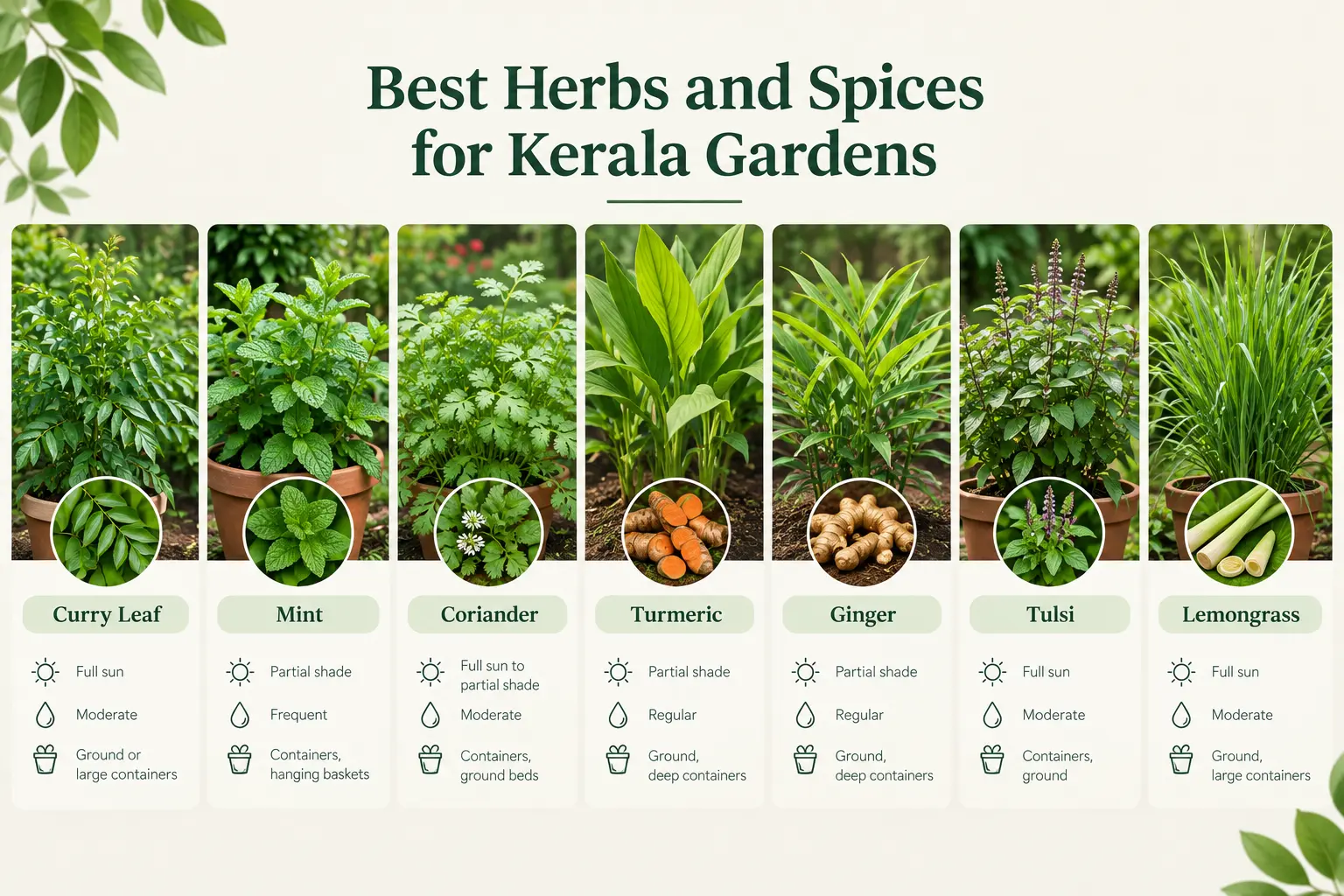
Curry Leaf is a Kerala kitchen essential, grown almost universally in home gardens for its aromatic leaves. See our Curry Leaf Care Guide for detailed growing tips.
Mint spreads quickly and does best in a dedicated container. Its roots can take over a shared bed if left unchecked. It tolerates some shade better than most herbs on this list.
Coriander grows quickly from seed and is best sown in small, successive batches every few weeks. It tends to bolt (flower and go to seed) faster in Kerala’s heat than in cooler climates.
Turmeric grows from a rhizome planted just below the soil surface and takes several months to mature. It rewards patience with a genuinely useful harvest, both the fresh rhizome and its leaves have culinary uses.
Ginger grows similarly to turmeric, from a rhizome, in partial shade with regular moisture. It suits a deep container or a shaded corner of a ground bed well.
Tulsi, or holy basil, holds both culinary and cultural significance in Kerala households. It grows easily from seed or cuttings and tolerates a range of conditions once established.
Lemongrass grows into a dense clump of long, aromatic blades and tolerates Kerala’s heat and humidity well. It’s useful both in cooking and as a natural mosquito deterrent near seating areas.
Growing Herbs in Containers vs Ground
Most herbs and spices adapt well to either setting, but a few considerations help you choose.
Containers suit Mint especially well. Its spreading roots are much easier to contain in a pot than in open ground. Coriander and Tulsi also do well in containers, making them practical for balconies and small spaces. Our guide to Best Pots and Planters for Home Gardening covers container choices suited to herbs.
Ground planting benefits rhizome crops like Turmeric and Ginger. These need more root depth and space to develop well, though both also grow successfully in deep containers if ground space isn’t available. Curry Leaf and Lemongrass also do well planted directly in the ground once they’ve outgrown their nursery pots.
Basic Care Tips
A few habits apply across most herbs and spices in this list.
Harvest regularly. Most herbs actually grow bushier and more productive with regular harvesting. This encourages new growth rather than letting the plant grow leggy and go to seed.
Watch drainage during monsoon. Herbs like Mint and Coriander don’t tolerate waterlogged soil well. Check that containers drain properly during Kerala’s heaviest rains.
Divide and refresh periodically. Spreading herbs like Mint benefit from being divided and replanted in fresh soil every year or two. This keeps them productive rather than overcrowded and depleted.
Common Problems
A few issues show up across most herbs and spices grown in Kerala.
- Bolting (premature flowering) in Coriander happens faster in hot weather. Plant in partial shade during the hottest months to slow this down.
- Root rot in container-grown herbs usually results from poor drainage rather than overwatering alone. Check that pots have adequate drainage holes.
- Slow establishment in Turmeric and Ginger is normal, both take several months to show significant growth. Patience matters more than intervention here.
- Leggy, sparse growth in most herbs points to insufficient light or infrequent harvesting. Both encourage the plant to stretch rather than fill out.
Conclusion
Herbs and spices for Kerala gardens don’t need to be complicated or space-hungry. A herb and spice garden is one of the most rewarding additions to a Kerala home: compact, low-maintenance, and genuinely useful in daily cooking. Curry Leaf, Mint, Coriander, Turmeric, Ginger, Tulsi, and Lemongrass cover most everyday kitchen needs between them. All seven grow well in Kerala’s climate with basic, consistent care.
For a deeper dive into each herb, see our Curry Leaf Care Guide, with dedicated guides for the rest of this herbs and spices lineup coming soon. In the meantime, our Vegetable Gardening in Kerala guide pairs well with a herb garden for a complete kitchen garden setup.