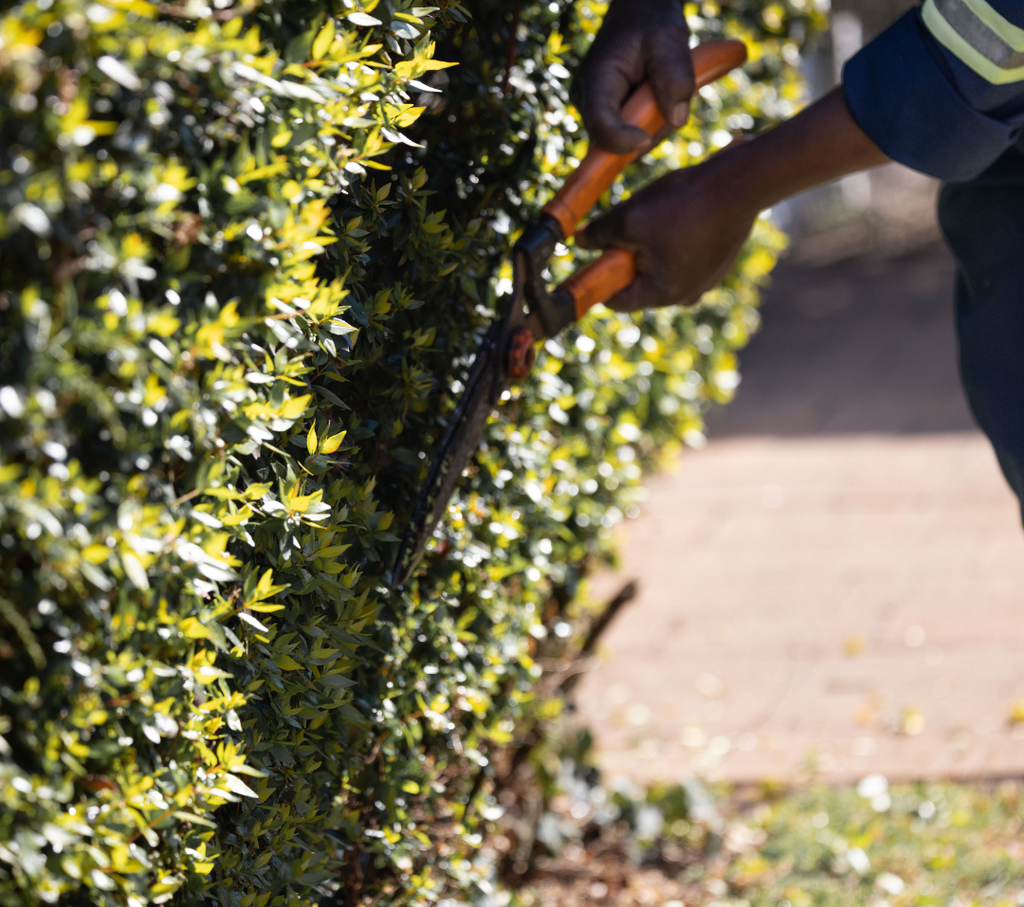
Quick answer: The best border plants in Kerala are Crossandra, dwarf Ixora, Coleus, and Marigold. All four stay short and compact, making them ideal for framing garden beds, walkways, and lawn edges. Unlike tall hedge plants, border plants prioritize color and neat edging over privacy or height.
Border plants do a different job than hedges. Where a hedge screens a view or marks a tall boundary, a border plant frames a space. It edges a walkway, outlines a flower bed, or softens the line between lawn and pavement. The best choices stay compact, need minimal trimming, and often add color along with structure.
This guide covers the most reliable border plants in Kerala. It also covers how to plant and space them, and the basic care that keeps a border looking neat.
Border Plants vs Hedge Plants
It’s worth being clear about the difference before choosing anything. Hedge plants like Ficus and Ashoka grow tall and dense, built for privacy screens and boundary walls. Border plants stay low, usually under half a meter. They’re chosen for color, texture, and a clean edge rather than height.
If you’re looking for a tall privacy screen, our Hedge Plants for Kerala Gardens guide covers that separately. This guide focuses specifically on shorter, decorative edging.
Best Border Plants in Kerala
| Plant | Mature Height | Sunlight | Color |
| Crossandra | 30-45 cm | Partial shade to full sun | Orange, yellow, salmon |
| Dwarf Ixora | 30-60 cm | Full sun to partial shade | Red, orange, yellow |
| Coleus | 30-60 cm | Partial shade | Multicolor foliage |
| Marigold | 20-40 cm | Full sun | Orange, yellow |
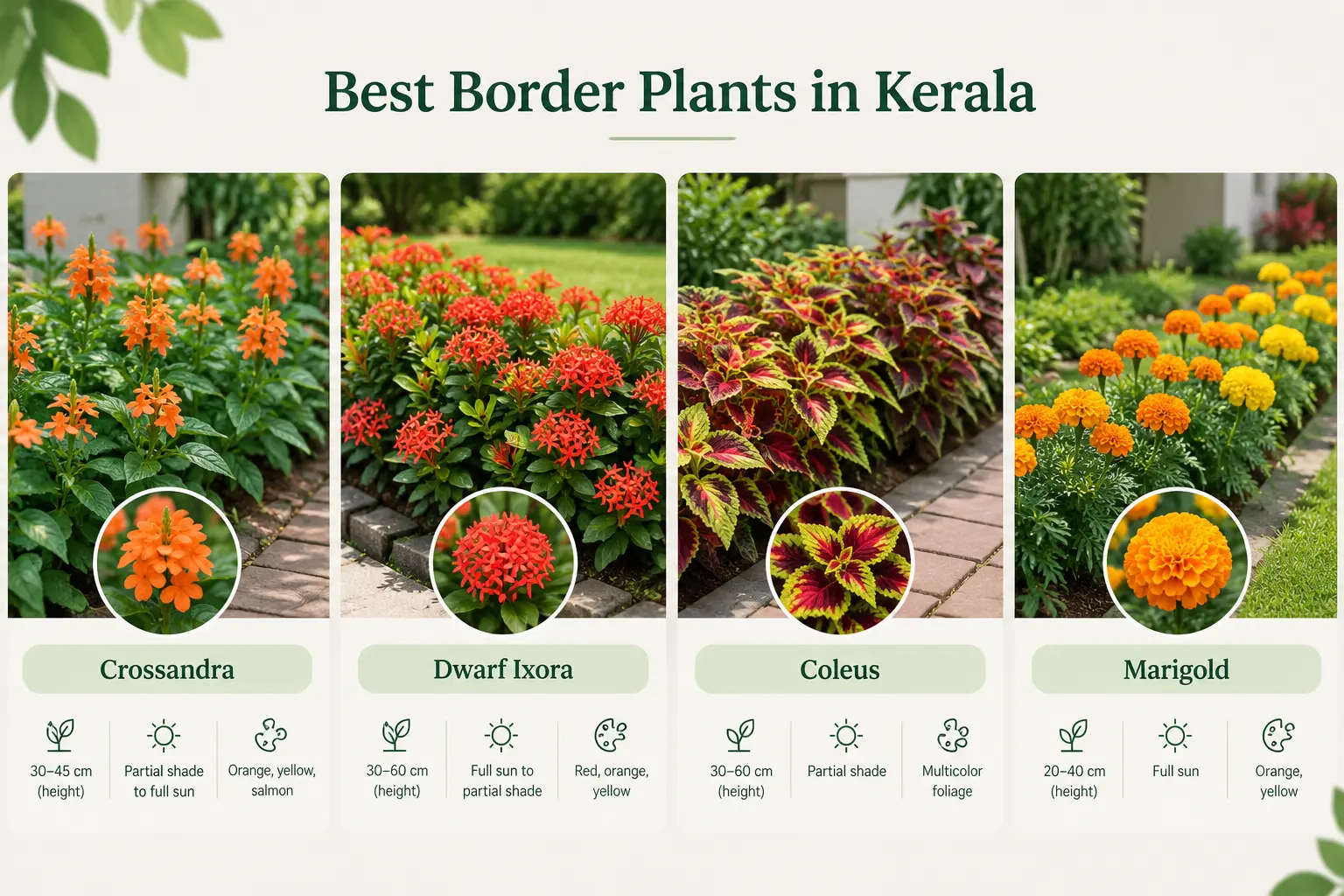
Crossandra produces upright spikes of orange, yellow, or salmon flowers and tolerates partial shade better than most flowering border plants. It suits borders along shaded walkways where full-sun plants would struggle.
Dwarf Ixora brings the same dense, star-shaped flower clusters as standard Ixora. It’s just on a more compact plant bred specifically for borders and low hedging. It handles regular light trimming well if you want a very tidy edge.
Coleus stands out for its foliage rather than flowers, with leaves patterned in combinations of green, red, purple, and yellow. It adds color even without blooming, which makes it useful for shadier borders where flowering options are limited.
Marigold grows quickly and flowers within weeks. This makes it a fast way to add a colorful border while slower-growing plants establish elsewhere in the garden. See our Marigold Care Guide for detailed growing tips.
Planning a Border Planting
Borders work best when planted in a continuous line or repeating pattern rather than scattered individually. Before planting, decide what the border needs to do. It might frame a walkway, outline a flower bed, or separate a lawn from a paved area.
Match the plant to the light the border actually gets. A border along a shaded house wall suits Crossandra or Coleus. A border along an open, sunny path suits Marigold or Dwarf Ixora. Mixing a flowering plant with a foliage plant like Coleus can also add visual contrast rather than relying on flowers alone.
Planting and Spacing
Space border plants closer together than you would hedge plants, since the goal is a continuous, tidy line rather than individual specimens. As a general guide, space most border plants 20 to 30 centimeters apart for a dense, unbroken edge.
Dig a shallow trench along the planned border line rather than individual holes. This makes it easier to keep the row straight and evenly spaced. Mix compost into the soil before planting, and water thoroughly to help roots establish.
Basic Border Maintenance
Borders need lighter, more frequent maintenance than hedges. The goal is a neat, low profile rather than a large structural shape.
Trim lightly every few weeks to keep the line even, rather than waiting for significant overgrowth. Deadhead flowering border plants like Crossandra and Marigold regularly to keep blooms coming. For foliage plants like Coleus, pinch back growing tips occasionally to encourage bushier, fuller growth along the row.
Common Problems
A few issues come up regularly with border plantings in Kerala.
- Uneven growth along the row usually means inconsistent sunlight across the border’s length. Check whether part of the border sits in more shade than the rest.
- Leggy growth in flowering border plants often points to insufficient light or skipped deadheading. Address both before adding fertilizer.
- Fungal issues can develop in densely planted borders with poor airflow, especially during monsoon. Slightly wider spacing helps if this becomes a recurring problem.
- Gaps in the row typically mean one or two plants didn’t establish well. Replace them promptly rather than leaving a visible break in the line.
Conclusion
Border plants in Kerala do the quiet work of framing a garden, walkway, or bed without the height or bulk of a hedge. Choose Crossandra or Coleus for shadier spots, Dwarf Ixora or Marigold for sunny ones. Keep up with light, regular trimming to hold a clean edge.
For taller structural planting, see our guide to Hedge Plants for Kerala Gardens. For more color options beyond borders, explore Best Flowering Plants for Kerala too.