Quick answer: Ginger care starts with planting healthy rhizome pieces in partial shade with loose, well-draining soil. Keep the soil consistently moist, feed with compost during active growth, and expect a harvest in about 8 months. Ginger tolerates Kerala’s humidity well and needs comparatively little attention once it’s established.
Ginger is another rhizome crop that suits Kerala’s climate well, alongside its close relative Turmeric. It’s a household kitchen essential, used fresh in everything from tea to curries. Growing your own means never running short of a small piece when a recipe calls for it.
This guide covers how to plant and care for Ginger through its growing cycle. It also covers harvesting tips and common problems.
Planting Ginger
Ginger grows from a rhizome rather than seed. Choose a fresh, firm piece with visible growth buds or “eyes,” similar to how you’d select a seed potato. Cut larger rhizomes into smaller pieces if needed, each with at least one growth bud. Let cut surfaces dry for a day before planting to reduce the risk of rot.
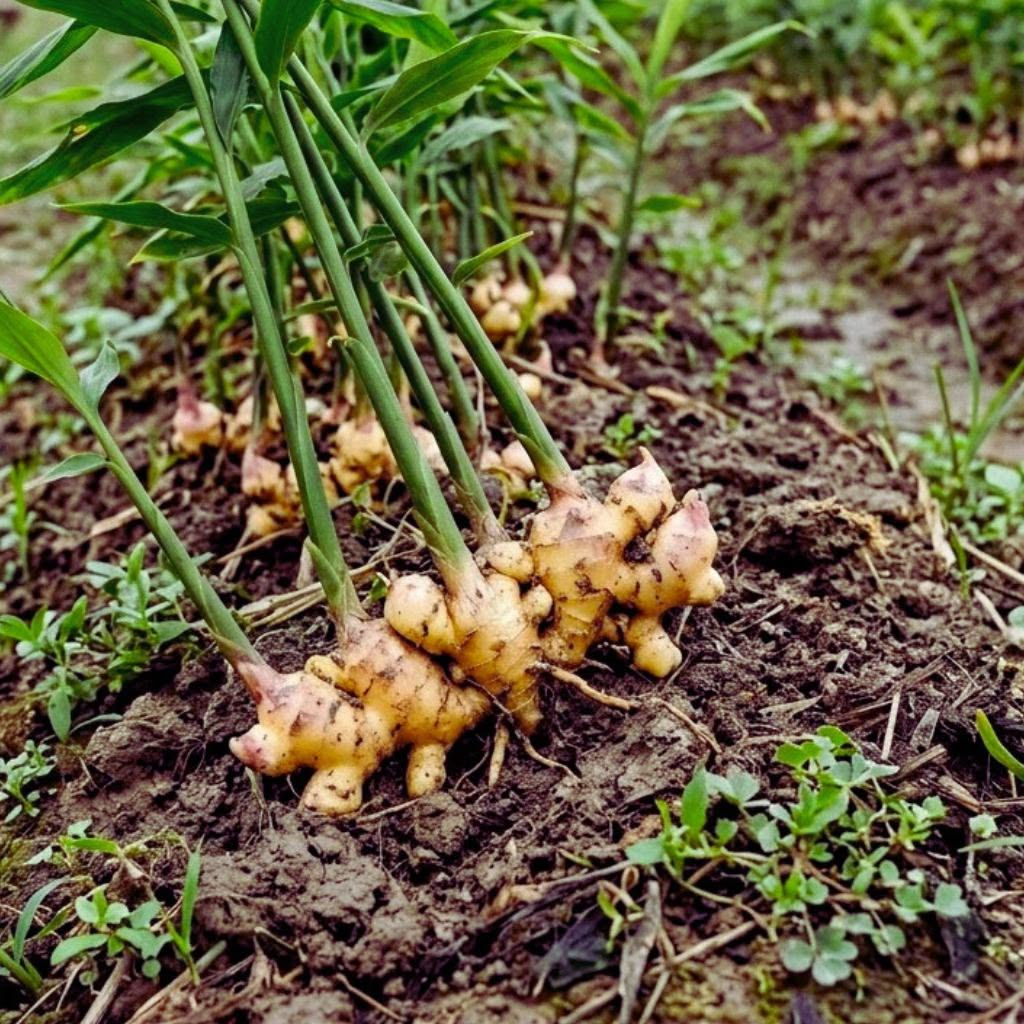
Plant pieces about 5 centimeters deep, bud facing upward, in loose, well-draining soil. The best planting window in Kerala is at the start of the rainy season, typically April to May. This gives young shoots consistent moisture as they establish.
Sunlight Requirements
Ginger prefers partial shade, more so than many other kitchen garden plants. Direct, intense sun, particularly during Kerala’s hottest months, can stress the plant and slow its growth.
A spot under the dappled shade of taller plants or trees suits Ginger particularly well. If you’re growing it in an open area, some afternoon shade helps protect it during the hottest part of the day.
Watering Ginger
Ginger needs consistently moist soil throughout its growing season, though it doesn’t tolerate waterlogging any better than most plants. Water regularly enough to keep the soil from drying out completely, while making sure excess water can drain away.
During monsoon, natural rainfall usually covers most of Ginger’s watering needs. During drier months, water two to three times a week, adjusting based on local conditions and how quickly your particular soil dries out.
Soil and Feeding
Ginger grows best in loose, rich soil with good drainage, similar to what Turmeric needs. Work compost or well-rotted organic matter into the soil before planting. This gives the rhizomes room to develop without competing against compacted, heavy soil.
Feed with compost or a balanced organic fertilizer every 6 to 8 weeks during active growth. Ginger responds well to regular, moderate feeding rather than infrequent heavy doses.
Growing Ginger in Containers
Ginger adapts well to container growing, which makes it a practical option even without much ground space. Choose a container at least 30 centimeters deep to give the rhizomes room to spread. Our guide to Best Pots and Planters for Home Gardening covers container choices suited to deeper-rooted plants like Ginger.
Container-grown Ginger dries out faster than ground-planted Ginger. Check the soil moisture a little more often, especially during Kerala’s summer.
Harvesting Ginger
Ginger typically takes around 8 months to mature, slightly faster than Turmeric. You can harvest “young ginger” earlier, around 4 to 5 months, for a milder, more tender rhizome often used fresh. Or wait the full period for a stronger, more mature harvest better suited to drying and storage.
Signs of maturity include yellowing, drying leaves. Dig up rhizomes carefully to avoid damaging them, and set aside a few healthy pieces to replant for the next growing cycle.
Common Problems
Ginger is generally easy to grow, but a few issues come up occasionally.
- Rhizome rot develops in waterlogged or poorly draining soil. Check drainage and reduce watering if rhizomes feel soft when you check on them.
- Slow growth is often just the plant’s natural pace in its early months. Avoid over-intervening, since Ginger takes time to show visible progress above ground.
- Yellowing leaves before the expected harvest window can point to overwatering, inconsistent watering, or nutrient deficiency. Check watering consistency first.
- Fungal leaf spots can appear during prolonged wet, humid periods. Improve airflow and remove badly affected leaves promptly.
Conclusion
Ginger rewards patience with a genuinely useful harvest and needs comparatively little intervention once it’s established. Plant healthy rhizomes in partial shade, keep the soil consistently moist, and let the growing season take its course. A few pots or a small bed can keep a household stocked with fresh ginger for much of the year.
For more herbs and spices to grow alongside Ginger, see our guide to Best Herbs and Spices for Kerala Gardens. You can also explore our Turmeric Care Guide for another rhizome crop that shares a similar growing cycle.