Best Pots and Planters for Home Gardening
Quick answer: The best pot for your plant depends on three things: adequate drainage holes, enough room for root growth, and a material suited to your climate and the plant’s water needs. Terracotta suits plants that prefer to dry out between waterings, plastic and fiber pots retain moisture longer and work well in Kerala’s heat, and grow bags are a practical, breathable option for vegetables and terrace gardens.
Most gardening advice focuses on soil, sunlight, and watering, and rightly so. But the pot or planter you choose plays a bigger role in plant health than most homeowners realize. The right container supports healthy root growth and proper drainage. The wrong one quietly works against everything else you’re doing right. No amount of good soil or careful watering fully makes up for a pot that traps moisture or restricts roots.
This becomes even more important once you’re buying in any quantity. A balcony with a dozen containers needs a deliberate mix of materials and sizes. So does a terrace garden with a full range of vegetables, herbs, and flowering plants. Getting this right the first time saves money on cracked terracotta, waterlogged plastic pots, and plants that need repotting within a few months of purchase.
This guide breaks down the main types of pots and planters, how to size them correctly, and the mistakes that trip up most first-time gardeners. If you’re still working out what to grow before deciding what to grow it in, our Gardening Tips for Kerala Homeowners guide is a good starting point.
Why the Right Pot Matters for Plant Health
A pot does more than hold soil in place. It directly affects how much water reaches the roots, how quickly excess water drains away, and how much room the plant has to grow.
Choose the wrong container and you’ll usually see one of these problems:
- Roots sitting in waterlogged soil, leading to root rot
- A plant that outgrows its pot and becomes rootbound
- Soil drying out too quickly in hot weather
- Poor airflow around the roots, slowing growth
In Kerala’s climate specifically, pot choice matters even more. Heavy monsoon rain means drainage can’t be an afterthought. Warm temperatures mean materials that retain too much moisture can encourage fungal problems. Getting the container right from the start makes everything else, watering, feeding, monitoring, considerably easier.
Types of Pots and Planters Explained
Different materials suit different plants, budgets, and settings. Here’s how the common options compare.
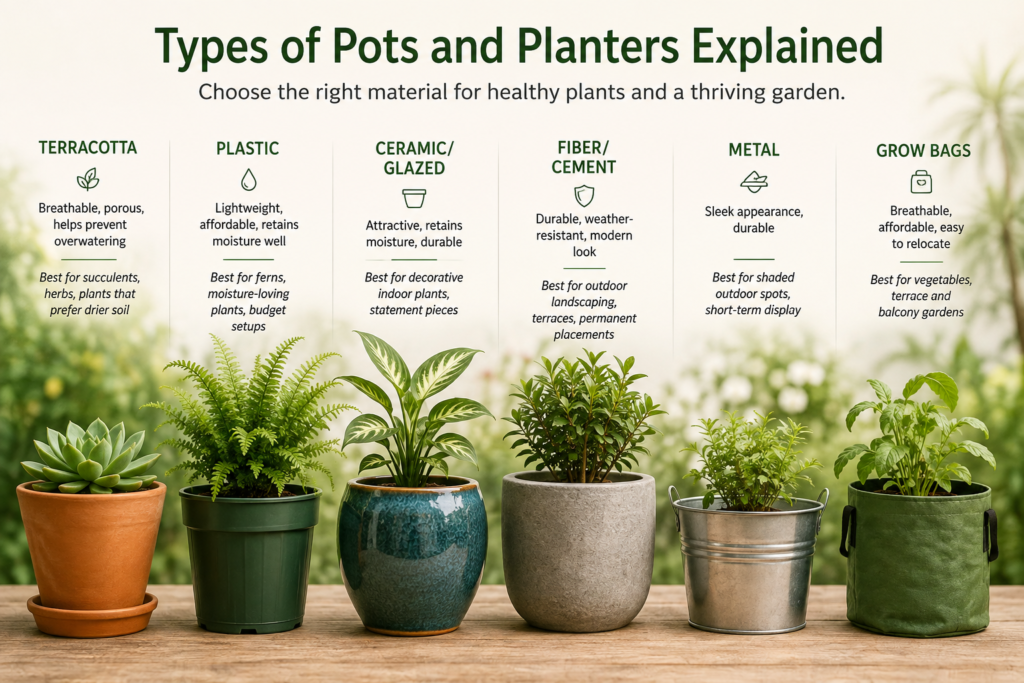
| Material | Pros | Cons | Best For |
| Terracotta | Breathable, porous, helps prevent overwatering | Dries out fast, heavy, breakable | Succulents, herbs, plants that prefer drier soil |
| Plastic | Lightweight, affordable, retains moisture well | Less breathable, can look less premium | Ferns, moisture-loving plants, budget setups |
| Ceramic/Glazed | Attractive, retains moisture, durable | Heavy, often lacks drainage holes unless specified | Decorative indoor plants, statement pieces |
| Fiber/Cement | Durable, weather-resistant, modern look | Can be expensive, heavy to move | Outdoor landscaping, terraces, permanent placements |
| Metal | Sleek appearance, durable | Heats up quickly in sun, can damage roots | Shaded outdoor spots, short-term display |
| Grow Bags | Breathable, affordable, easy to relocate | Less durable over multiple seasons | Vegetables, terrace and balcony gardens |
If you’re setting up a terrace or balcony specifically, our upcoming guide to [Container Gardening in Kerala] goes deeper into which of these work best for elevated, space-limited growing.
How to Choose the Right Pot Size
A common mistake is choosing a pot based on how the plant looks today rather than how large it will grow. A pot that’s too small restricts root development and dries out fast. On the other hand, an oversized pot can hold excess moisture around a small root system for too long, raising the risk of root rot.
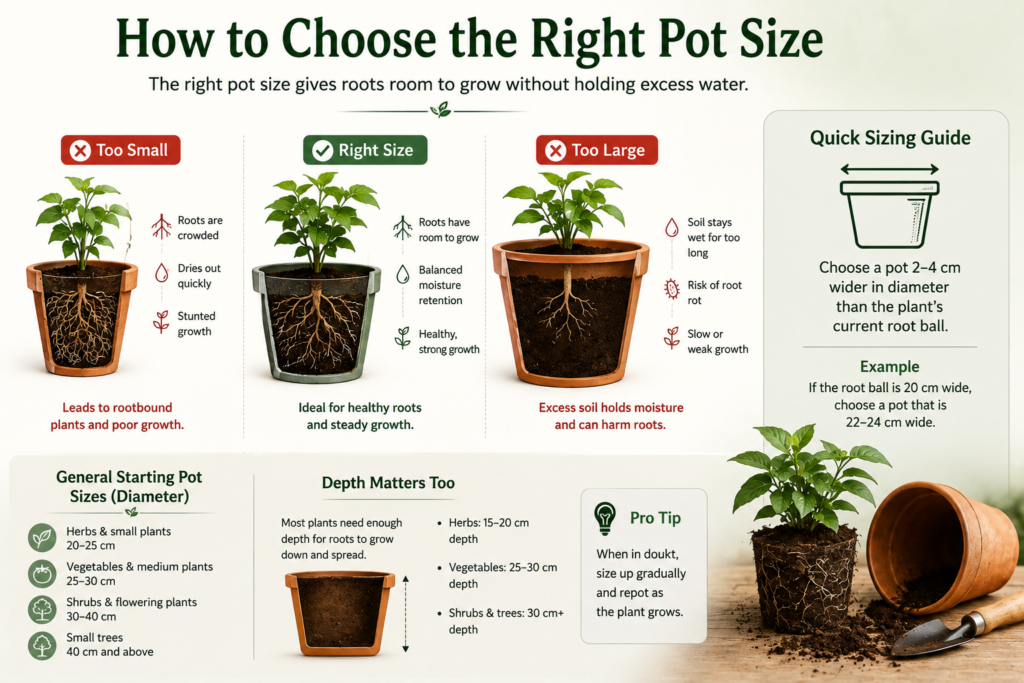
A simple rule of thumb: choose a pot roughly 2 to 4 centimeters wider than the plant’s current root ball, and repot as it grows rather than jumping straight to a large container. A 20 to 30 centimeter pot is usually a good starting point for young vegetable and herb plants. Mature shrubs and small trees need considerably more room, often 40 centimeters or more in diameter.
When in doubt, size up gradually. It’s easier to repot a healthy plant than to recover one that’s been sitting in the wrong size container for months.
Indoor vs Outdoor Planters: What’s Different
Indoor and outdoor containers face different conditions, and the right choice reflects that.
Indoor planters generally benefit from materials that retain moisture a little longer, since indoor plants are watered less frequently and are more sheltered from direct heat. Ceramic and plastic pots with a drainage tray work well here, especially for popular indoor choices like Snake Plant, ZZ Plant, and Peace Lily. For plant-specific advice, our guide to [Best Indoor Plants for Kerala Homes] covers which species suit different rooms and light levels.
Outdoor planters need to handle direct sun, heavy rain, and temperature swings. Fiber, cement, and glazed ceramic hold up well outdoors, while terracotta can crack over time if it isn’t rated for continuous outdoor exposure. For plant pairing ideas suited to Kerala’s outdoor conditions, see [Best Outdoor Plants for Kerala Gardens].
Drainage and Small-Space Considerations
Whatever material you choose, drainage holes are non-negotiable, particularly during Kerala’s monsoon months. A decorative pot without drainage might look appealing, but standing water around the roots is one of the fastest ways to lose a healthy plant. If you fall for a pot without holes, use it as an outer decorative sleeve and keep the actual plant in a properly draining inner pot instead.
For balconies and terraces, weight and footprint matter as much as drainage. Lightweight materials like plastic and fiber help reduce structural load. Grow bags are especially practical too, since they can be moved, folded, and stored away when not in use. Elevating pots slightly off the surface with pot feet or a stand also helps water drain freely and protects flooring from moisture damage.
Common Mistakes When Choosing Pots
A few recurring mistakes account for most container-related plant problems:
- Skipping drainage holes to preserve a decorative pot’s appearance
- Choosing a pot that’s too large, which keeps soil wet longer than the plant’s roots can use
- Ignoring the material’s fit for the climate, like using unglazed terracotta outdoors where it dries out too fast in Kerala’s heat
- Not accounting for weight on terraces and balconies, especially with large ceramic or cement planters
- Reusing old pots without cleaning them, which can carry over pests or fungal spores from a previous plant
Avoiding these is usually simpler than fixing the plant problems they cause later. It’s also worth reassessing your containers each season rather than assuming a setup that worked last year still fits. A pot that drained well before heavy monsoon rain arrived can behave very differently once the soil around it stays saturated for days at a time.
Conclusion
The right pot or planter isn’t just about appearance. It’s a working part of your plant’s growing environment, right alongside soil, sunlight, and water. Match the material to your climate and the plant’s needs, size the container appropriately, and never compromise on drainage. Do that, and you’ll avoid most of the common problems home gardeners run into.
If you’re ready to choose containers for your own space, browse ROOTIQUE’s full range of pots and planters suited to Kerala homes, from terracotta and ceramic to practical grow bags for terrace and balcony gardens.