Kitchen waste composting at home is one of the simplest ways to turn everyday food scraps into a natural fertilizer for your garden. Instead of throwing vegetable peels and fruit scraps into the bin, you can convert them into nutrient-rich compost that helps plants grow healthier while reducing household waste.
For home gardeners in Kerala, composting is especially rewarding. The state’s warm and humid climate naturally supports faster decomposition when the compost is managed properly. Whether you grow vegetables, flowering plants, indoor plants, or herbs, homemade compost provides a steady source of organic nutrients that improve soil quality over time.
The best part is that you don’t need a large backyard or expensive equipment to get started. A simple compost bin, a few kitchen scraps, and regular care are enough to create high-quality compost for your home garden.
In this guide, you’ll learn:
- What kitchen waste can and cannot be composted
- How to start composting at home step by step
- The best composting methods for Kerala households
- Common composting mistakes and simple solutions
- How to use finished compost to grow healthier plants
Kitchen Waste Composting Is Worth Starting
Kitchen waste composting offers more than just an eco-friendly way to manage household waste. It creates a valuable source of organic compost that improves plant health, supports healthier soil, and reduces the need for chemical fertilizers. Whether you’re growing vegetables, flowering plants, or indoor plants, homemade compost is a simple addition that can make a noticeable difference in your garden.
Benefits for Your Garden
Homemade compost improves your garden naturally by enriching the soil with organic matter. As the compost breaks down, it releases nutrients slowly, helping plants grow steadily without the sudden nutrient spikes that synthetic fertilizers can cause.
Some of the key gardening benefits include:
- Improves soil fertility by adding essential organic nutrients.
- Supports stronger root development for healthier plants.
- Encourages beneficial soil microbes that improve soil health.
- Increases the soil’s ability to retain moisture, reducing frequent watering.
- Improves soil structure, making it easier for roots to spread.
These benefits are especially valuable for vegetable gardening in Kerala, where frequent rainfall and high temperatures can gradually reduce soil quality over time.
Benefits for Your Home
Kitchen waste composting is also a practical habit for every household. Instead of sending organic waste to landfills, you can recycle it into something useful for your garden.
Some everyday benefits include:
- Reduces the amount of kitchen waste produced each day.
- Saves money by reducing the need to buy commercial fertilizers.
- Creates a steady supply of organic compost throughout the year.
- Supports a cleaner and more sustainable home gardening routine.
If you’re planning to grow plants without relying heavily on synthetic fertilizers, learning how to start an organic home garden is the perfect next step. Homemade compost is one of the foundations of successful organic gardening.
What Kitchen Waste Can You Compost?
Knowing what goes into your compost bin is the first step to making healthy, nutrient-rich compost. A good compost pile contains a mix of green materials, which provide moisture and nutrients, and brown materials, which improve airflow and help balance the compost. Using a variety of these everyday materials encourages faster decomposition and produces compost that’s ideal for your home garden.
Green Materials (Nitrogen-Rich)
Green materials are fresh, moist organic waste commonly produced in the kitchen. They provide nutrients that help microorganisms break down the compost efficiently.
Some of the best green materials for kitchen composting for beginners include:
- Vegetable peels and trimmings
- Fruit scraps and fruit peels
- Coffee grounds
- Tea leaves or plastic-free tea bags
- Crushed eggshells (rinse and crush before adding)
Chopping larger scraps into smaller pieces can help them decompose more quickly. It’s also a good habit to add kitchen waste regularly instead of letting it pile up for several days.
Green Materials (Nitrogen-Rich)
Green materials are fresh, moist organic waste commonly produced in the kitchen. They provide nutrients that help microorganisms break down the compost efficiently.
Some of the best green materials for kitchen composting for beginners include:
- Vegetable peels and trimmings
- Fruit scraps and fruit peels
- Coffee grounds
- Tea leaves or plastic-free tea bags
- Crushed eggshells (rinse and crush before adding)
Chopping larger scraps into smaller pieces can help them decompose more quickly. It’s also a good habit to add kitchen waste regularly instead of letting it pile up for several days.
Brown Materials (Carbon-Rich)
Brown materials keep your compost healthy by improving airflow and absorbing excess moisture. Without enough browns, compost can become soggy and develop unpleasant odours.
Common brown materials available in most Kerala households include:
- Dry leaves
- Shredded newspaper (black-and-white print only)
- Small pieces of cardboard
- Coco peat (optional)
- Untreated sawdust
- Dry grass
Whenever you add a layer of kitchen scraps, cover it with a layer of brown materials. This simple practice helps reduce smells, discourages fruit flies, and supports steady composting.
What Should You Avoid Composting?
While many kitchen scraps can be composted, some materials are best kept out of your compost bin. They can attract pests, create unpleasant odours, or slow down the composting process.
Avoid adding:
- Meat and fish waste
- Dairy products
- Oily or greasy food
- Cooked food with excess oil or spices
- Plastic or other non-biodegradable materials
- Diseased plants
- Pet waste
If you’re unsure whether something belongs in the compost bin, it’s usually safer to leave it out. Sticking to simple fruit and vegetable scraps, along with suitable brown materials, makes home composting in Kerala easier and more successful for beginners.
How to Start Kitchen Waste Composting at Home
Starting a compost bin at home is easier than many beginners expect. With a suitable container, the right mix of kitchen scraps and dry materials, and a little regular care, you can turn everyday organic waste into nutrient-rich compost for your garden.
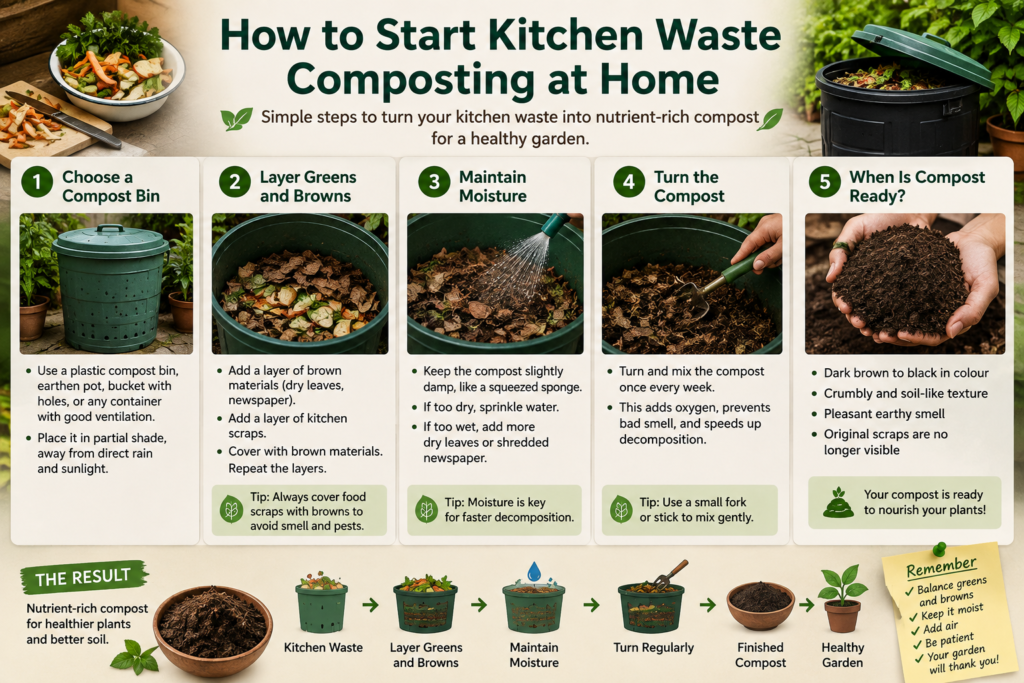
Follow these simple steps to get started.
Choose a Compost Bin
The first step is selecting a compost bin that fits your available space and gardening needs. You don’t need expensive equipment; a simple container with proper ventilation works well for most households.
Some popular options include:
- Plastic compost bins – Lightweight, durable, and suitable for balconies, backyards, or terraces.
- Earthen pots – A traditional option that provides natural airflow and blends well with home gardens.
- Buckets with ventilation holes – An affordable DIY solution for beginners.
- Commercial compost bins – Designed for faster and more convenient composting, with features like lids and ventilation.
Place the compost bin in a partially shaded area where it is protected from heavy rain and receives good airflow. This helps maintain consistent moisture and supports healthy decomposition.
Layer Green and Brown Materials
Once your compost bin is ready, begin adding kitchen waste in layers. Instead of filling the bin with only food scraps, alternate them with dry brown materials such as dry leaves or shredded newspaper.
A simple layering pattern looks like this:
- Add a layer of brown materials.
- Add a layer of fresh kitchen scraps.
- Cover the scraps with another layer of brown materials.
- Repeat the process as new kitchen waste is collected.
This layering method helps maintain airflow, controls moisture, and reduces unpleasant odours. Covering fresh food scraps also discourages fruit flies and other pests.
Maintain Moisture
Your compost should feel slightly damp, like a squeezed sponge. This moisture level allows beneficial microorganisms to break down organic matter efficiently.
If the compost looks too dry, sprinkle a small amount of water. If it becomes soggy, mix in extra brown materials such as dry leaves or shredded cardboard to absorb the excess moisture.
Avoid pouring large amounts of water into the compost bin, as excessive moisture can slow decomposition and create unpleasant smells.
Turn the Compost Regularly
Turning the compost introduces fresh air into the pile, helping microorganisms work more efficiently. It also prevents the compost from becoming compacted and reduces the chance of bad odours.
Use a small garden fork or stick to gently mix the compost about once every week. There’s no need to empty the entire bin—simply loosen and mix the materials from top to bottom.
Regular turning helps the compost break down more evenly and keeps the process moving smoothly.
When Is Compost Ready?
Finished compost is easy to recognize. Instead of focusing on a fixed timeline, look for these signs:
- Dark brown to black in colour
- Crumbly and soil-like texture
- Pleasant earthy smell
- Original kitchen scraps are no longer visible
Once the compost reaches this stage, it’s ready to use around vegetables, flowering plants, fruit trees, and indoor plants.
If you still notice large pieces of vegetable peels or other scraps, allow the compost to mature for a little longer before using it.
Best Composting Methods for Homes
There are several ways to compost kitchen waste at home, but not every method suits every household. The best choice depends on the space you have, the amount of kitchen waste you generate, and the level of maintenance you’re comfortable with.
Here are three composting methods that work well for most homes in Kerala.
Compost Bin Method
The compost bin method is the simplest and most popular option for beginners. It involves collecting kitchen scraps and layering them with dry brown materials inside a compost bin or ventilated container.
This method is ideal for:
- Independent houses with a small garden
- Terrace gardens
- Home gardeners who want a low-maintenance composting system
With regular layering, proper moisture, and occasional turning, the compost gradually breaks down into a nutrient-rich soil amendment that can be used throughout the garden.
Pros
- Beginner-friendly
- Affordable to set up
- Suitable for most homes
- Produces compost for vegetables, flowers, and ornamental plants
Vermicomposting
Vermicomposting uses composting worms to break down kitchen waste into nutrient-rich compost, often called worm castings. This method produces high-quality compost that’s especially beneficial for vegetables, flowering plants, and potted plants.
It’s a good option if you:
- Enjoy organic gardening
- Want nutrient-rich compost for regular gardening
- Can provide a suitable environment for composting worms
Although vermicomposting requires a little more care than a standard compost bin, many gardeners find it rewarding because the finished compost is rich in nutrients and supports healthy plant growth.
Bokashi Composting
Bokashi composting is a convenient option for apartments and homes with limited outdoor space. It uses a sealed bucket and a special microbial bran to ferment kitchen waste, including some food scraps that are usually avoided in traditional compost bins.
After fermentation, the material is buried in soil or added to a compost system to complete the decomposition process.
This method is ideal for:
- Apartment residents
- Homes with limited outdoor space
- Gardeners looking for a compact composting solution
While Bokashi requires a special starter mix, it is an excellent alternative for households that cannot maintain a traditional compost bin.
Common Composting Problems and Easy Fixes
Even a well-maintained compost bin can face occasional issues. The good news is that most composting problems are easy to fix with a few simple adjustments. If your compost smells unpleasant, attracts fruit flies, or seems to stop decomposing, you usually don’t need to start over.
Use the table below to identify the problem and get your compost back on track.
| Problem | Possible Cause | Easy Solution |
| Bad smell | Too many green materials or excess moisture | Add dry leaves, shredded newspaper, or other brown materials and turn the compost. |
| Compost is too wet | Heavy rainfall or too much kitchen waste | Mix in more brown materials and ensure the bin has proper drainage. |
| Compost is too dry | Lack of moisture | Sprinkle a little water and mix the compost gently. |
| Fruit flies | Food scraps are left uncovered | Cover every layer of kitchen waste with dry leaves or shredded newspaper. |
| Slow composting | Poor airflow or large food scraps | Turn the compost regularly and chop larger scraps into smaller pieces before adding them. |
How to Use Homemade Compost in Your Garden
After your compost is ready, it can be used to improve soil health and support healthy plant growth. Mix it into vegetable beds, apply it around flowering plants, or blend it into potting mixes for container gardening. Using mature compost regularly helps create healthier soil, stronger roots, and more productive plants.
Every type of plant has different compost requirements, and applying the right amount at the right time makes a noticeable difference. Read our complete guide on How to Use Homemade Compost in Your Garden to learn the best application methods for vegetables, flowering plants, indoor plants, and container gardens.
Composting Tips for Kerala’s Climate
Kerala’s warm and humid climate naturally supports faster composting, but heavy monsoon rains and high moisture levels require a little extra care. Keeping your compost bin in partial shade, protecting it from heavy rain, adding extra dry leaves, and turning the compost regularly will help maintain a healthy composting process throughout the year.
For more seasonal advice and practical maintenance tips, explore our detailed guide on Composting Tips for Kerala’s Climate to learn how to compost successfully in every season.
Conclusion
Kitchen waste composting at home is a simple habit that offers long-term benefits for both your garden and your household. By turning everyday kitchen scraps into nutrient-rich compost, you can improve soil health, support stronger plant growth, and reduce the amount of organic waste sent to the bin.
Whether you grow vegetables, flowering plants, herbs, or indoor plants, homemade compost provides a natural way to nourish your garden throughout the year. With a suitable compost bin, the right mix of green and brown materials, and a little regular care, anyone can start composting successfully.
For Kerala homeowners, the warm climate makes composting even more rewarding when moisture and airflow are managed properly. Start with a small compost bin, follow the simple steps in this guide, and you’ll soon have a steady supply of organic compost ready to enrich your garden.
If you’re looking to build a thriving home garden, composting is just the beginning. Explore our gardening guides to learn how to improve soil health, choose the right plants, and grow a healthier, more productive garden.