Quick answer: Curry Leaf care is simple. Give it full sun, at least 4 to 6 hours daily. Water when the top inch of soil dries out. Use well-draining soil enriched with compost. Prune regularly to encourage bushier growth. Get these basics right, and Curry Leaf provides a steady supply of aromatic leaves for cooking year-round.
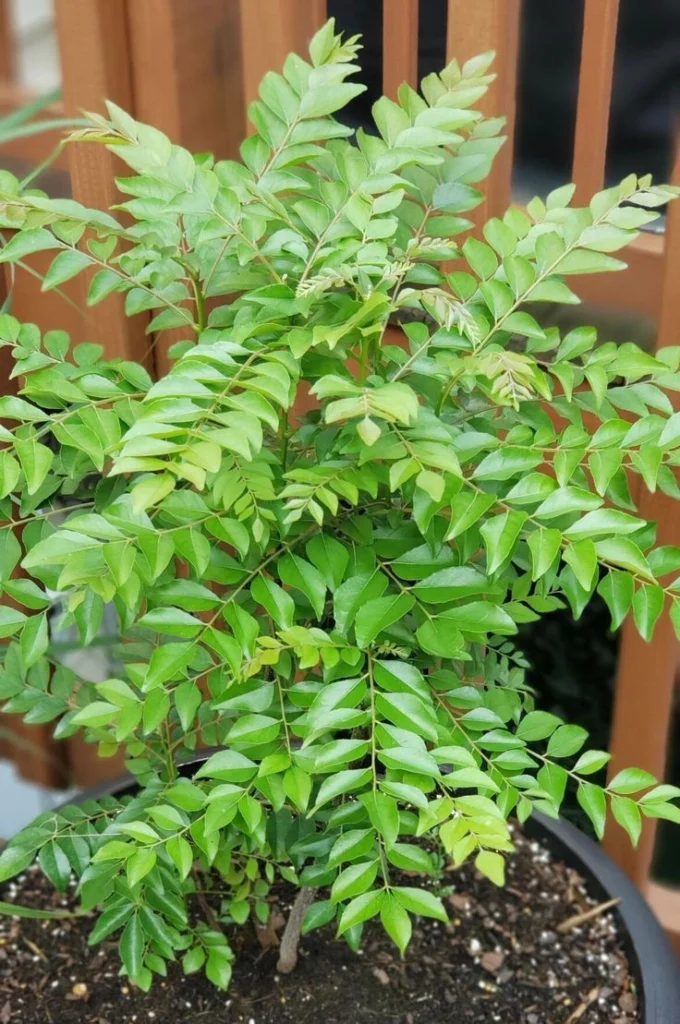
Curry Leaf is a staple in nearly every Kerala kitchen garden. Its aromatic leaves are essential to South Indian cooking, and the plant itself is relatively easy to grow once established. Whether you’re growing it in the ground or in a container, Curry Leaf rewards consistent care. Simple, regular attention gets you a steady harvest.
This guide covers what Curry Leaf needs to thrive, along with pruning tips and common problems to watch for.
Sunlight Requirements
Curry Leaf needs full sun to grow well and produce plenty of leaves. Aim for at least 4 to 6 hours of direct sunlight daily. In too much shade, the plant survives but grows slowly and produces noticeably fewer leaves.
If you’re growing Curry Leaf in a pot, place it in the sunniest spot on your balcony or terrace. A plant that looks sparse or pale often just needs more direct light. Check this before assuming a soil or nutrient problem.
Watering Curry Leaf
Curry Leaf prefers consistent moisture but doesn’t tolerate waterlogged soil well. Water when the top inch of soil feels dry to the touch. During Kerala’s summer, this might mean watering every day or two for potted plants. During monsoon, cut back significantly and rely on rainfall.
Good drainage matters as much as watering frequency. Curry Leaf roots sitting in constantly wet soil are prone to root rot, especially in containers without proper drainage holes. Our guide to Best Pots and Planters for Home Gardening covers good container choices for Curry Leaf and other kitchen garden plants.
Soil and Feeding
Curry Leaf grows best in well-draining soil enriched with organic matter. A mix of garden soil, compost, and a bit of sand works well both in the ground and in containers.
Feed every 3 to 4 weeks during the main growing season with a balanced fertilizer. Alternatively, work compost into the soil around the base every couple of months. Reduce feeding during the heaviest monsoon months, when growth naturally slows down.
Pruning for Bushier Growth
Regular pruning keeps Curry Leaf productive rather than tall and sparse. Without it, the plant tends to grow leggy, with leaves concentrated mostly at the top.
Pinch or trim the growing tips regularly, especially while the plant is young. This encourages branching lower down, which means more leaves overall rather than just height. Harvesting leaves for cooking actually doubles as light pruning, so regular use in the kitchen helps keep the plant bushy.
Avoid heavy pruning all at once. Instead, trim a little regularly. This keeps a steady supply of fresh leaves coming rather than stripping the plant bare in one go.
Common Problems
Curry Leaf is fairly low-maintenance, but a few issues come up often enough to know about.
- Yellowing leaves usually point to overwatering or poor drainage. Check the soil before assuming a nutrient deficiency.
- Leaf drop can happen after a sudden change in conditions, like a recent move or a big temperature swing. The plant usually recovers once conditions stabilize.
- Aphids and scale insects sometimes target new growth. A neem oil spray applied in the early morning or evening usually clears them up within a week or two.
- Slow growth in containers often means the plant has outgrown its pot. Curry Leaf develops a fairly deep root system over time. Repotting to a larger container every couple of years supports steadier growth.
Conclusion
Curry Leaf remains one of the most practical plants for a Kerala kitchen garden. It’s easy to grow, endlessly useful in the kitchen, and fairly forgiving once established. Give it full sun, consistent watering, and regular light pruning. It will keep your kitchen stocked with fresh leaves for years.
For more kitchen garden options to grow alongside Curry Leaf, see our guide to Best Outdoor Plants for Kerala Gardens. You can also explore our Vegetable Gardening in Kerala guide for more kitchen garden staples.